
VF-1 Wolfpack Patch 1972-1993
- SKU:
- 905
- MPN:
- 905
- Width:
- 4.50 (in)
- Height:
- 5.00 (in)
- Depth:
- 0.08 (in)
- Backing:
- Sew On
- Edging:
- Merrowed Edge
- Squadron Type:
- Fighter and Strike Fighter Squadrons (VF / VFA / VA)


Description
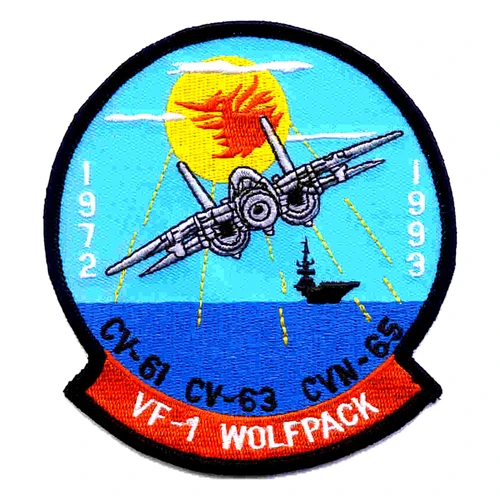
VF-1 and VF-2 stood up together at NAS Miramar on 14 October 1972 as the first two fleet squadrons of the F-14 Tomcat, and in April 1975 the Wolfpack flew the Tomcat's first combat mission, covering the evacuation of Saigon. The squadron took its first F-14A on 1 July 1973. Its first cruise was aboard USS Enterprise CVN-65 with Carrier Air Wing 14 in September 1974. Twenty-one years later it was gone, disestablished in 1993 after the carrier it called home was retired. The three hull numbers stitched across this patch are the three decks the Wolfpack flew from in between.
Over Saigon in Operation Frequent Wind, VF-1 and VF-2 Tomcats flew cover for the helicopters lifting people out of the city. Enterprise took the squadron back to the Western Pacific in 1976 and 1978, and in 1977 the ship stood off East Africa during the Uganda hostage crisis. From September 1980 the Wolfpack flew with Carrier Air Wing 2, mostly aboard USS Ranger CV-61, with one 1984 cruise on USS Kitty Hawk CV-63 that included Team Spirit. Ranger's crew took part in Operation Nimble Archer against Iranian oil platforms in October 1987. On 6 February 1991, LT Stuart Broce and his RIO, CDR Ron McElraft, shot down an Iraqi Mi-8 Hip with an AIM-9M Sidewinder, the only Tomcat kill of Operation Desert Storm.
The patch is round with a bottom tab, 4.5 by 5 inches, with a dark navy merrowed edge. A gray F-14 climbs straight at you with its wings spread, against a light blue sky and a gold sun crossed by white clouds and gold rays. An orange flame-like figure burns inside the sun. A carrier sits in silhouette on the dark blue sea below, and the dates 1972 and 1993 run down either side in white. CV-61, CV-63 and CVN-65 curve across the water in navy blue, and an orange banner at the bottom reads VF-1 WOLFPACK in white.
The squadron's own red wolf's head was drawn by Grumman artist George M. Kehew, a World War II combat veteran. By 1984 the Wolfpack had logged 22,000 flight hours without an accident, a number any maintainer will respect. After the Gulf War the squadron flew Southern Watch over southern Iraq and supported Operation Restore Hope in Somalia. When Ranger was decommissioned in 1993, VF-1 went with her, and its people were reassigned across the fleet. For two decades, the Wolfpack was one of the squadrons that made the Tomcat a fleet fighter.
Frame it in a shadow box with your Ranger or Enterprise cruise patches, or sew it on a jacket for a Tomcat reunion at Miramar. It also makes a good gift for a son or daughter who grew up hearing about the cat and the boat. It measures 4.5 by 5 inches with a merrowed edge and a sew-on backing. Anyone who worked a VF-1 jet will know the three hull numbers at a glance.
Related Products


