
USAF Special Tactics Patch
- SKU:
- 10555
- MPN:
- 10555
- Width:
- 4.00 (in)
- Height:
- 4.00 (in)
- Depth:
- 0.08 (in)
- Backing:
- Sew On
- Edging:
- Cut Edge


Description
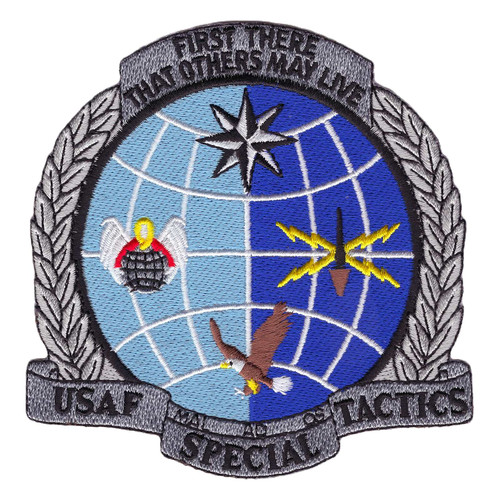
The scroll across the top of this patch joins two mottos from two career fields: First There belongs to combat control, and That Others May Live belongs to pararescue. Special Tactics is where those two communities were put on the same team. The globe underneath is split down the middle, light blue on one side and dark blue on the other. On one half is the winged guardian angel holding the world that pararescuemen wear as their emblem, and on the other the crossed lightning bolts and dagger of the combat controller. One patch, two trades, one mission set.
The Air Force stood up the 1720th Special Tactics Group at Hurlburt Field, Florida, on October 1, 1987, under Twenty-Third Air Force, the command that became Air Force Special Operations Command. It was redesignated the 720th Special Tactics Group on March 31, 1992, and has fallen under the 24th Special Operations Wing, along with squadrons such as the 23rd Special Tactics Squadron, since June 12, 2012. Combat controllers trace back to the Air Force pathfinders activated in 1953, the men who set up navigation aids and ran air traffic on drop zones and austere strips. Pararescue is the Defense Department's only force organized for full-spectrum personnel recovery. On Takur Ghar in Afghanistan in March 2002, combat controller Technical Sergeant John Chapman fought to his last breath, and his Air Force Cross was upgraded to the Medal of Honor in 2018.
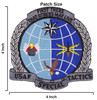
The patch is 4 inches by 4 inches, with a cut edge that follows its outline and sew-on backing. Silver-gray laurel branches climb both sides of the globe, and a gray scroll across the top carries FIRST THERE over THAT OTHERS MAY LIVE in black. A black and white compass star sits at the top of the white-gridded globe. The guardian angel, white wings, red cloak and gold halo, holds a black world on the light blue half, while gold lightning bolts cross behind a dagger on the dark blue half. A bald eagle flies across the bottom of the globe, and the bottom scrolls read USAF, SPECIAL and TACTICS.
Special Tactics airmen are a small community, and most of them go out in very small numbers attached to SEAL teams, Army Special Forces and Ranger units. A combat controller might be the one man on the ground who can open an airfield, run the air traffic and bring fires down close to friendly troops. A pararescueman might be the one who reaches a wounded man under fire and keeps him alive until the helicopter lands. Special operations weathermen, who received their own Air Force Specialty Code on May 5, 2008, worked the same teams. Their names are on the memorial walls at Hurlburt Field, and the men who served with them do not forget them.
Mount it in a shadow box beside a scarlet or maroon beret, or sew it on a range bag or a jacket. It is a meaningful gift for a family member who wants to understand the work a combat controller or PJ did. Some patches need no explanation to the right people.
Related Products


