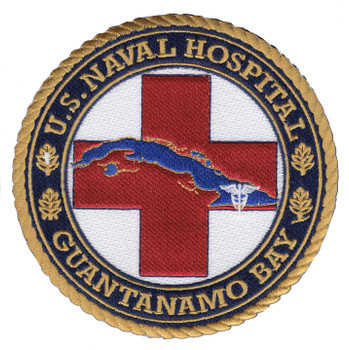
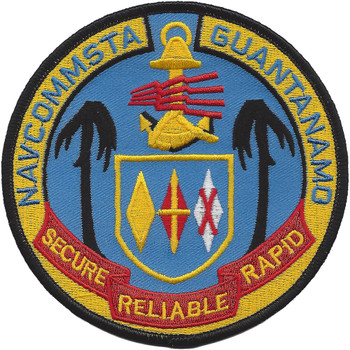
Naval Station Guantanamo Bay Cuba Patch

- SKU:
- 9644
- MPN:
- 9644
- Width:
- 4.00 (in)
- Height:
- 4.00 (in)
- Depth:
- 0.08 (in)
- Backing:
- Iron On
- Edging:
- Merrowed Edge


Description
Guantanamo Bay has been an American naval station since the lease was signed in two parts in 1903, and it calls itself the oldest overseas American naval base. Sailors know it as GTMO, or Gitmo. Marines first came ashore there in 1898 during the Spanish-American War, and a monument on McCalla Hill honors the Navy officer and five Marines who died in the Battle of Guantanamo Bay. For most of the twentieth century it was where Atlantic Fleet ships went to train. If you served aboard a destroyer or cruiser on the East Coast, odds are good you spent time steaming in and out of that bay.
The Fleet Training Group was based at Guantanamo from 1943 to 1995, putting crews through the refresher training that got ships ready to deploy. During World War II the base was a gathering point for merchant convoys running from New York and Key West to the Panama Canal and the Caribbean. Leeward Point Field opened in 1943 and was lengthened to 8,000 feet in 1953 for jets, while McCalla Field, dating to 1931, was later shut down. When the Cuban Missile Crisis broke in October 1962, base families were evacuated by air and sea and returned that December. In 1964 Cuba cut off the Yateras River water supply, and the base answered with water barged in from Jamaica and a desalination plant moved from Point Loma in San Diego.
The patch is round, 4 inches wide by 4 inches tall, with a red merrowed edge. A royal blue ring carries red lettering, U S NAVAL STATION across the top and GUANTANAMO BAY CUBA across the bottom. The center is white, with a red-outlined blue shield set over an anchor. A spread-winged eagle sits on the anchor stock, an arrow crosses the shield, and sprays of red leaves stand on either side. It has an iron-on backing and can also be sewn on.
GTMO has always been its own world. A 17-mile fence line rings the base, with the Northeast Gate set in it, and everything from fresh water to groceries had to be planned for. Ships came for weeks of drills under Fleet Training Group inspectors and left as better crews. Marines stood the fence line, and Navy families raised kids on the windward and leeward sides of the bay. For many sailors, the GTMO cruise was the first time the ship really came together.
Mount it in a shadow box beside your ship patches from the Atlantic Fleet years. It also works on a vest or a jacket, and it makes a good gift for a shipmate who still talks about refresher training in Cuba. A patch from one of the Navy's most familiar ports of call.
Related Products