VMFA-321 Marine Fighter Attack Squadron Patch
- SKU:
- 9320
- MPN:
- 9320
- Width:
- 4.00 (in)
- Height:
- 4.50 (in)
- Depth:
- 0.08 (in)
- Backing:
- Iron On
- Edging:
- Cut Edge


Description
VMFA-321 flew its first combat in F4U Corsairs from Barakoma Airfield on Vella Lavella, and it finished more than sixty years later as a Marine Reserve Hornet squadron at Andrews. The squadron stood up on 1 February 1943 at MCAS Cherry Point as VMF-321, part of Marine Aircraft Group 31. In the Solomons the Hell's Angels claimed 39 kills and 11 probables, with the first kill coming from First Lieutenant Robert B. See four days after arrival. From there the squadron moved to the Guam area and flew bombing missions against Japanese bases. Deactivated in January 1946, it came back that July as a Marine Corps Reserve fighter squadron at NAS Anacostia with fourteen Corsairs.
Recalled on 1 March 1951 for the Korean War, VMF-321 was flying F8F Bearcats, and its Marines went out to augment other units rather than deploying together. Skyraiders followed in the 1950s, then the FJ-4B Fury in 1962, about the time the squadron moved to Andrews Air Force Base after Anacostia stopped fixed-wing flying. The F-8 Crusader arrived in 1965. In December 1973 VMFA-321 became the first Marine Air Reserve squadron to receive the F-4 Phantom II, later flying the F-4S, and in 1991 it moved to the F/A-18 Hornet. Its jets wore the MG tail code with a pitchfork running through the letters.
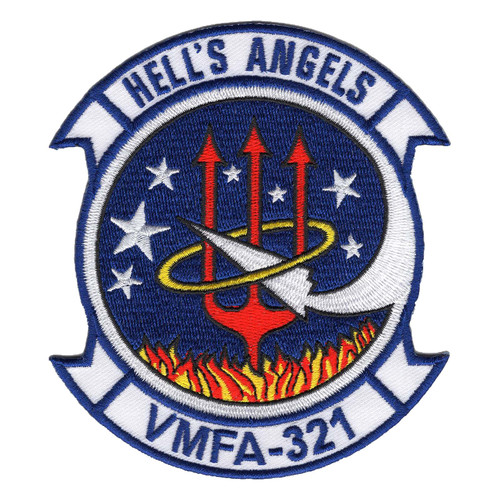
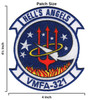
This patch measures 4 inches wide by 4.5 inches tall, with a cut edge and an iron-on backing. HELL'S ANGELS runs across a white scroll at the top and VMFA-321 across a matching scroll at the bottom, both lettered in blue with a blue border. In the dark blue center disc, a red three-tined pitchfork rises out of red and gold flames, wrapped in a gold halo. A white swept-wing jet cuts through the halo and trails a white arc around the right side, with seven white stars scattered across the night sky. The halo and the pitchfork put both halves of the squadron name in one picture, the same pitchfork the Hornets carried on their tails.
On September 11, 2001, a VMFA-321 Hornet was the first Marine Corps aircraft to respond after the attacks, and that jet is now on display at the National Museum of the Marine Corps in VMFA-115 markings. Three years later to the day, on 11 September 2004, the squadron was deactivated under the Department of the Navy's Tactical Air Integration Plan. The Marines who flew and fixed its jets were Reservists who held civilian jobs and still kept a fighter squadron ready to go. The squadron flew Corsairs, Bearcats, Skyraiders, Furies, Crusaders, Phantoms and Hornets across those decades. Few squadrons in the Marine Corps can trace a line from the Solomons to the skies over Washington.
Mount it in a shadow box beside a 4th Marine Aircraft Wing patch and a set of Phantom or Hornet squadron patches, or sew it on the flight jacket or vest that goes to the next Hell's Angels reunion. It also makes a gift for a Marine who turned wrenches on the flight line at Andrews. One patch, sixty-one years of Marine Air Reserve fighters.
Related Products