VF-32 Fighter Squadron Patch

- SKU:
- 9063
- MPN:
- 9063
- Width:
- 3.88 (in)
- Height:
- 4.50 (in)
- Depth:
- 0.08 (in)
- Backing:
- Iron On
- Edging:
- Merrowed Edge
- Squadron Type:
- Fighter and Strike Fighter Squadrons (VF / VFA / VA)



Description
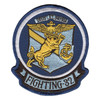
The lion on this patch picked up its sword when VF-32 moved to the F-8 Crusader, and that sword gave the squadron the name it still answers to, the Fighting Swordsmen. The heraldic lion went on the squadron's emblem in 1950, under a set of gold Naval Aviation wings. Above it runs the motto Deus et Patria, God and Country. The squadron began as Bombing Fighting Three, VBF-3, on 1 February 1945, became VF-4A in November 1946, and took the number 32 on 7 August 1948. It flew fighters under that number until it was redesignated VFA-32 in November 2005.
The Swordsmen flew the F6F Hellcat in 1945, the F8F Bearcat in 1946 and the F4U Corsair from 1948, then the F9F Cougar in 1952 and the F8U Crusader in 1956. The F-4B Phantom II came in 1965, the year the squadron moved to NAS Oceana, and the F-14 Tomcat in 1974. On 4 January 1989, two VF-32 Tomcats shot down two Libyan MiG-23s over the Gulf of Sidra. In Desert Storm the squadron flew 403 missions and logged 1,445 combat flight hours from USS John F. Kennedy (CV-67). Over the years its decks included USS Leyte, USS Saratoga, USS Franklin D. Roosevelt, USS Independence, USS Dwight D. Eisenhower, USS Theodore Roosevelt and USS Enterprise.
The patch is 3.88 inches wide and 4.5 inches tall, a circle that flares into a scroll at the bottom, with a blue merrowed edge. A white ring frames a navy field, and in the center a light blue shield is crossed by a gold band. The gold lion stands on its hind legs with the sword raised, gold wings spread over its head, and a small shield with a fouled anchor sits at its paw. DEUS ET PATRIA rides a scroll across the top, and FIGHTING-32 fills the scroll at the bottom. It has an iron-on backing, and stitching it down as well will hold it for good.
The hardest day in the squadron's history came over Korea. VF-32 flew from USS Leyte from October 1950 to January 1951, striking targets around Wonsan Harbor and the Chosin Reservoir. On 4 December 1950, Ensign Jesse L. Brown, the first African American aviator to complete the Navy's basic flight training program, was hit by ground fire and crash-landed his Corsair behind enemy lines. His wingman, Lieutenant (junior grade) Thomas Hudner, deliberately crash-landed beside him to try to pull him free, and could not. Hudner received the Medal of Honor and Brown the Distinguished Flying Cross, and the Navy later named ships for both men.
It belongs in a shadow box with a Tomcat-era cruise patch, or on the jacket a Swordsman wears to the next squadron reunion. It is also a good gift for a son or daughter who wants to know what VF-32 flew and where. From Hellcats to Tomcats, it is one lion and one sword.
Related Products