
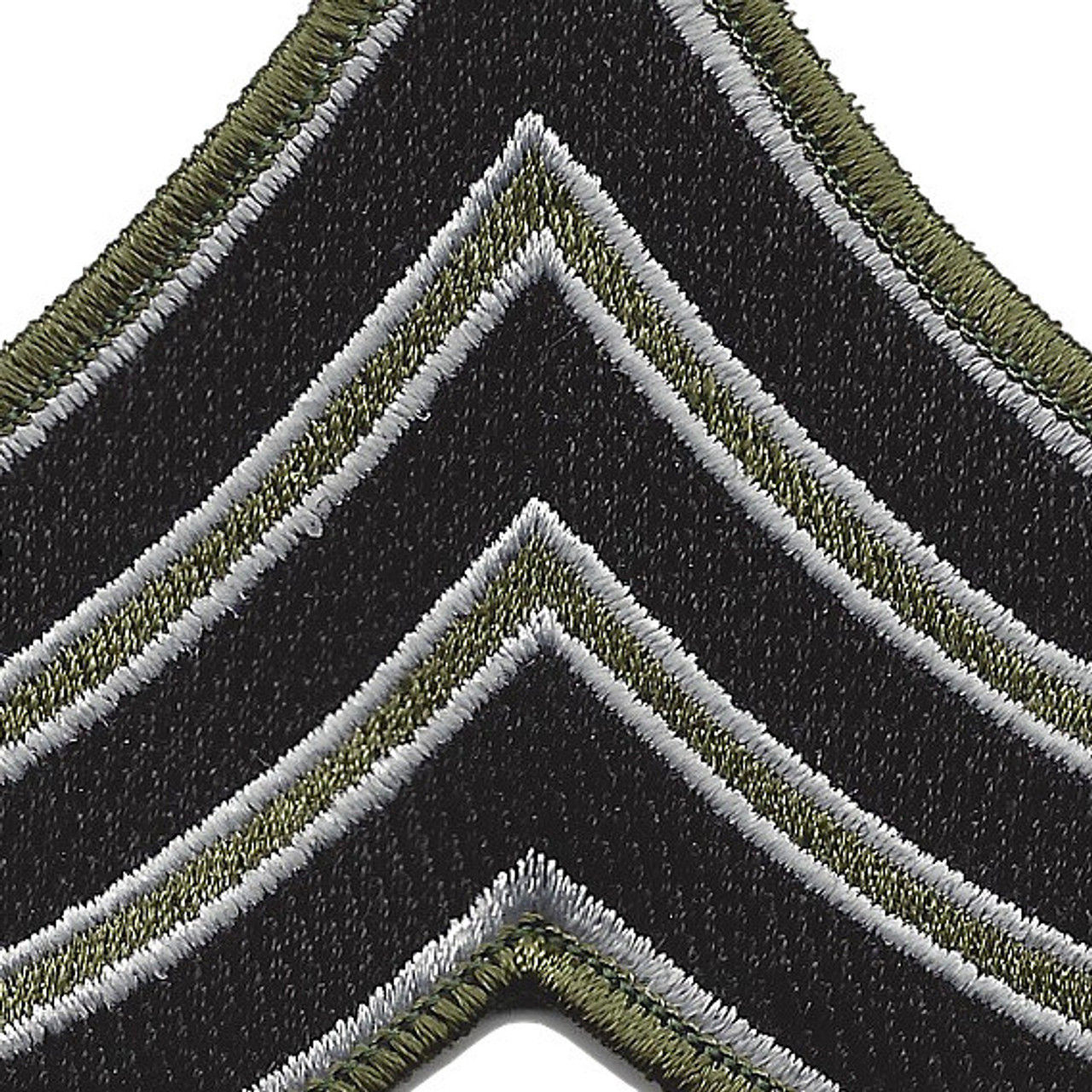
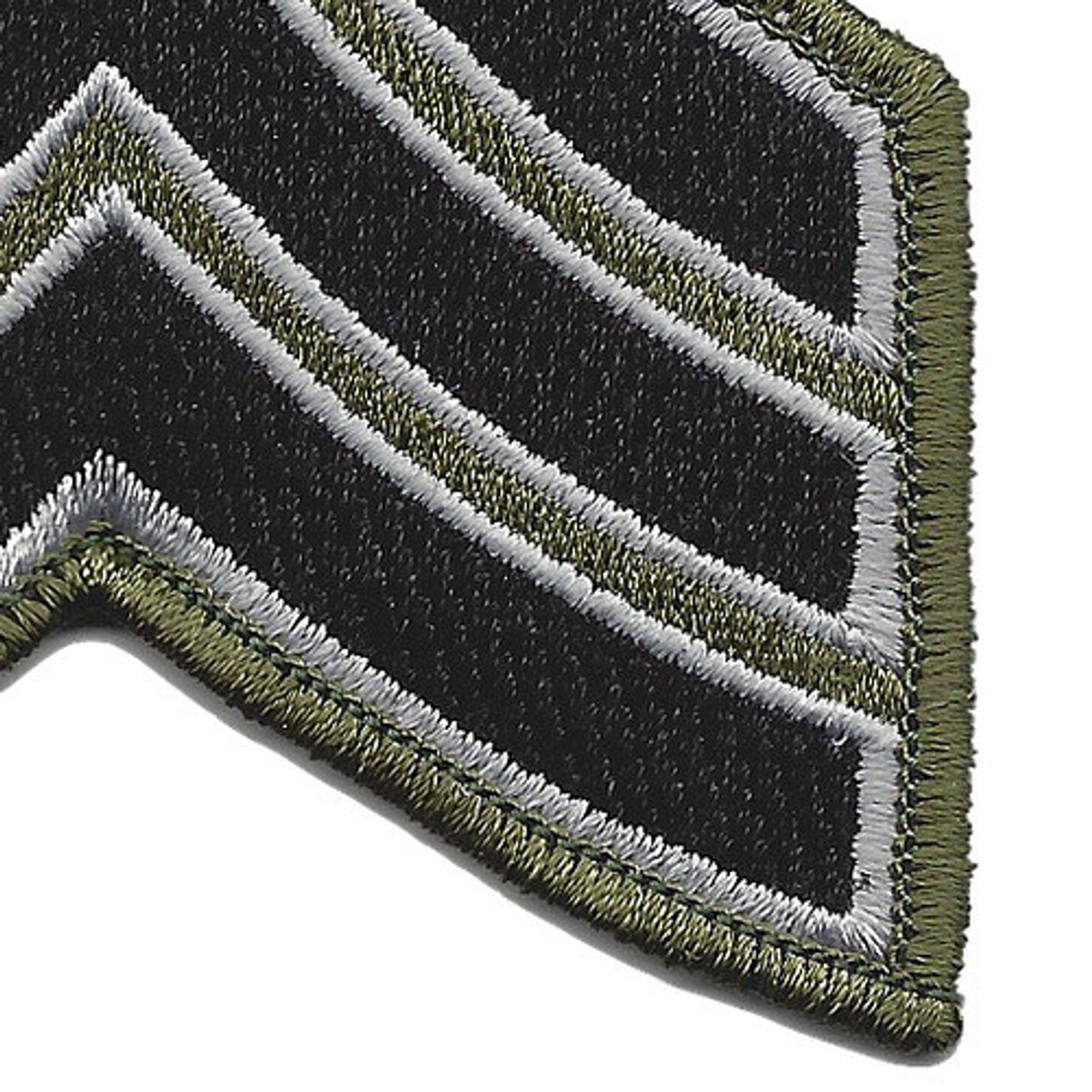
Sheriff Police Sargent Chevrons OD Black Patch

- SKU:
- 11729
- MPN:
- 11729
- Width:
- 3.25 (in)
- Height:
- 3.50 (in)
- Depth:
- 0.08 (in)
- Backing:
- Sew On
- Edging:
- Merrowed Edge







Description
The chevrons of a Sheriff or Police Sergeant are not decorative marks stitched onto a uniform; they are symbols of earned authority, responsibility, and trust placed at the most critical level of law enforcement leadership. Worn in olive drab, these chevrons reflect a tradition shaped by patrol streets, rural roads, night watches, and moments when decisions must be made without delay or outside direction.
The rank of sergeant emerged as law enforcement professionalized in the late nineteenth and early twentieth centuries. As departments grew, there was a need for leaders who were neither distant administrators nor newly appointed officers, but seasoned professionals who understood the realities of the street. Sergeants became the backbone of policing—first-line supervisors responsible for discipline, training, and the immediate conduct of deputies and officers under their charge.
In sheriff’s offices and police departments alike, sergeants are the ones who translate policy into action. They stand between command staff and patrol units, ensuring that procedures are followed, standards upheld, and mistakes corrected before they become failures. The chevrons signify that this individual has proven not only technical competence, but judgment under pressure—often earned through years of night shifts, critical incidents, and leadership during unpredictable calls.
The olive drab color carries its own meaning. Rooted in utility and restraint, OD reflects a mindset focused on function rather than appearance. It speaks to law enforcement’s paramilitary heritage and its emphasis on readiness, discipline, and cohesion. In both urban police departments and county sheriff’s offices, OD chevrons convey authority without excess, reinforcing command presence while remaining grounded in practicality.
Throughout modern law enforcement history, sergeants have led through some of the most demanding periods—Prohibition-era enforcement, civil unrest, the expansion of highway patrols, narcotics operations, and the evolving challenges of contemporary policing. They have been the steady presence on scenes ranging from routine calls to major incidents, responsible for both public safety and the welfare of the officers they supervise.
The culture behind the sergeant’s chevrons is one of accountability. Sergeants are expected to know their people, know their territory, and know when to step forward. They are mentors, enforcers of standards, and protectors of institutional integrity. Respect for the chevrons is not automatic—it is earned daily through consistency, fairness, and leadership by example.
Within United States law enforcement, the sergeant rank remains one of the most influential and respected positions, shaping how policing is experienced by both officers and the communities they serve.
Related Products


