Pararescue Jumper Patch Desert Version

- SKU:
- 6022
- MPN:
- 6022
- Width:
- 3.88 (in)
- Height:
- 4.00 (in)
- Depth:
- 0.08 (in)
- Backing:
- Iron On
- Edging:
- Merrowed Edge





Description
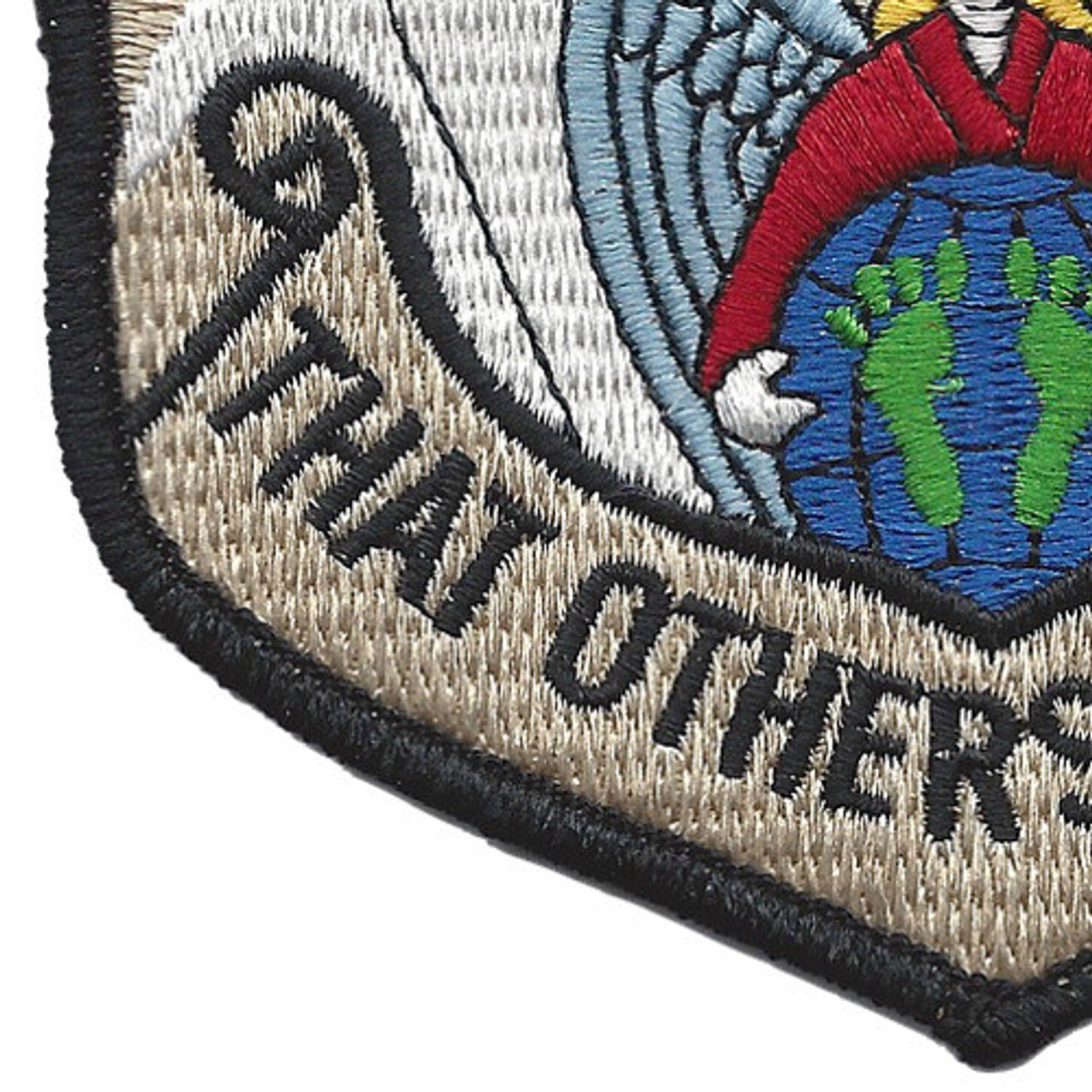
The USAF Pararescue desert patch is the same design as the standard issue, stripped of every color that would stand out in a forward operating environment — because the PJs who wore this version were in places where standing out was the wrong option. Badge-shaped, in tan and khaki, the patch carries "USAF PARARESCUE" across the top, the angel figure with wings and globe at center, and "THAT OTHERS MAY LIVE" along the bottom scroll. The color has changed. The mission hasn't.
The desert version of the Pararescue patch came into use during the wars in Iraq and Afghanistan, when PJ teams were forward-deployed alongside Army Ranger battalions, Special Forces ODAs, and SEAL Teams. They jumped into denied areas, provided trauma care under fire, and extracted casualties when the situation had already exceeded the limits of what was considered survivable. The subdued coloring isn't aesthetic — it's operational.
The patch is badge-shaped in desert tan and khaki, with a darker border. The angel figure retains the red cloak and white wings, which are the only real color in the design — just enough to read the imagery without breaking the subdued profile. The scroll text is muted tan on tan, readable up close and invisible at distance. This is a patch that went to war.
For PJ veterans of Iraq or Afghanistan, Combat Rescue Officers who deployed downrange, or collectors focused on OIF and OEF-era special operations patches, this desert version represents the real-world-use end of the PJ patch spectrum. The dress version hangs on the wall. This one went with the team.
"That Others May Live." In desert tan, it means someone was in a place where that motto wasn't hypothetical.
Related Products