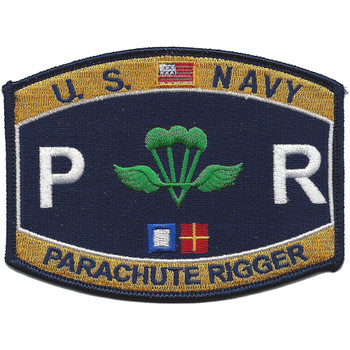
Parachute Rigger Badge Embroidered Patch

- SKU:
- 10395
- MPN:
- 10395
- Width:
- 4.50 (in)
- Height:
- 1.75 (in)
- Depth:
- 0.08 (in)
- Backing:
- Iron On
- Edging:
- Cut Edge




Description
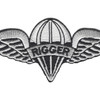
The badge was not approved until 9 June 1986, and the Army made it retroactive to May 1951, the month the Rigger School opened at Fort Lee. Thirty five years of riggers had packed and inspected without a badge to show for it, and then all of them became eligible at once. The Army does not do that often, and it says something about how the work was regarded once somebody finally added it up. The badge goes to enlisted soldiers and warrant officers who finish the course at the Quartermaster School. This patch is the embroidered version of it.
Getting to it starts with Basic Airborne Training, because a rigger is Airborne qualified before he is a rigger. Then comes MOS 92R and ten weeks at the Quartermaster School's Aerial Delivery and Field Services Department, split across parachute packing, aerial delivery, and aerial delivery maintenance. The packing is the part everyone pictures, but the course also covers repair work on inflatable rafts and survival equipment, which is a large share of what riggers actually keep running. The badge is awarded by the Commandant of the Quartermaster School at Fort Lee, Virginia. Everything the Army puts out of an aircraft, people and cargo both, goes out under something a rigger built, packed or inspected first.
The patch is cut to the outline of the badge itself, wings out to both sides, with no border ring around any of it. The canopy sits in the middle, deployed and full, with the suspension lines drawn down and converging below. RIGGER runs across the canopy on a straight scroll in block letters, and that scroll is the detail that separates this badge from jump wings at a glance. It is worked in silver grey and black on white with no color anywhere in it, which is how the badge has always looked. It measures 4.5 inches wide by 1.75 inches tall, cut edge, with iron on backing.
A rigger's name goes on the packing data card. That is the whole job in one line. Somebody he will probably never meet is going to trust that card at eight hundred feet with a full combat load, and there is no version of this work where close enough gets you through. Riggers know it, jumpers know it, and it produces a shop culture that reads as strange from the outside until you understand what is riding on the shakeout table. The badge is small and plain, and the people who earned it tend to like it that way.
It sits well in a shadow box with jump wings and a unit patch, and it reads clearly on a vest or a jacket at an Airborne reunion. It is also a straightforward gift for a rigger in the family who never made much noise about what he did. At four and a half inches wide it lays flat and stays readable.
Related Products