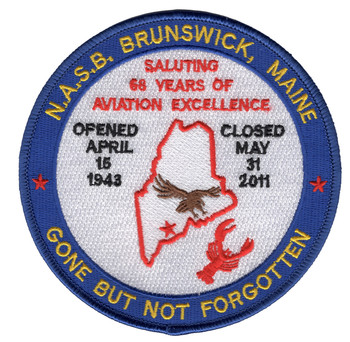
Naval Air Station Mcmurdo Antarctica Military Patch

- SKU:
- 1020
- MPN:
- 1020
- Width:
- 4.00 (in)
- Height:
- 4.00 (in)
- Depth:
- 0.08 (in)
- Backing:
- Iron On
- Edging:
- Merrowed Edge


Description
At the edge of the world, where the ice never melts and the horizon glows with an otherworldly light, stood one of the most remote and extraordinary outposts ever flown by the U.S. Navy—Naval Air Station McMurdo, Antarctica. Established in 1955 under Operation Deep Freeze, this frozen base became the gateway to the bottom of the earth, where sailors, aviators, and scientists worked together to push the limits of human endurance and exploration.
McMurdo wasn’t a typical naval air station—it was a lifeline. With temperatures plunging below –50°F and winds capable of tearing metal, every mission was an act of defiance against nature itself. Navy aircrews braved the elements to deliver supplies, fuel, and equipment to the isolated research stations scattered across the continent. Their aircraft—LC-130 Hercules equipped with massive ski landing gear—touched down on ice runways where no man-made structure could last. Every flight carried risk; every landing was a triumph.
In the early years, the Navy’s Seabees carved the base from ice and volcanic rock, constructing runways, hangars, and living quarters in conditions few could survive for long. It became the launch point for exploration deep into the continent’s interior—missions to the South Pole, geological surveys, and vital support for scientific discovery. Navy pilots flew through blizzards and whiteouts with no visual reference, guided only by instruments and faith in their crews. Their courage turned the most inhospitable place on earth into a bastion of knowledge and cooperation.
For decades, McMurdo was manned by sailors who embodied the Navy’s quiet professionalism—far from battle, but always in service. They endured months of darkness, isolation, and brutal cold to keep the flow of supplies and science alive. Though the base transitioned to civilian control in later years, the Navy’s legacy there endures in every airstrip, every operation, and every flight that still carries the call sign “Deep Freeze.”
The Naval Air Station McMurdo patch honors those who conquered the cold frontier—not with weapons, but with will. It is a symbol of exploration, endurance, and the indomitable spirit of those who served where few have ever gone.
Related Products