
NASA Space Shuttle Medical Operations Patch
- SKU:
- 8748
- MPN:
- 8748
- Width:
- 4.00 (in)
- Height:
- 4.00 (in)
- Depth:
- 0.08 (in)
- Backing:
- Iron On
- Edging:
- Merrowed Edge


Description
NASA Technical Memorandum 58252, the Shuttle orbital test flight medical report, covered the four orbital test flights, STS-1 through STS-4, and ran from space motion sickness countermeasures to cabin noise. It came out of the Johnson Space Center in Houston in July 1983. Its subjects show how wide the job was: crew health before, during and after flight, the medical kit aboard the orbiter, the cardiovascular system, drinking water, toxicology and radiation. That was medical operations on the Space Shuttle from the very first flight. This embroidered patch commemorates the people who did that work.
Columbia flew STS-1 on 12 April 1981, and the program ran 135 missions until Atlantis landed after STS-135 in July 2011. In Mission Control, the flight surgeon at the SURGEON console directed all medical activity during a flight. The surgeon watched crew health through telemetry, talked with the astronauts and advised the flight director. A private channel could be set up between the crew and the surgeon so a doctor and patient could talk in confidence. On the ground, medical teams carried crews through training, launch, landing and the recovery that followed every mission.
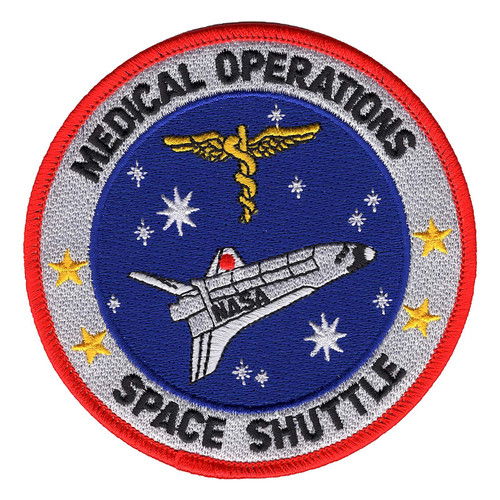
The patch is a 4 inch circle with a red merrowed border around a silver ring. MEDICAL OPERATIONS arcs across the top in heavy black letters and SPACE SHUTTLE runs along the bottom, with two gold stars on each side. The center is deep blue and scattered with white stars. A gold winged staff with a single serpent wound around it, the old sign of medicine, sits at the top. Below it a white orbiter with NASA on its side climbs up and to the right. It has an iron-on backing, and stitching it down as well will keep it on for good.
Medical operations watched the crew while everyone else watched the vehicle. The work started long before launch and went on long after wheels stopped, through readaptation to gravity and the research that came out of every flight. The Shuttle program also lost two crews, Challenger in 1986 and Columbia in 2003, fourteen astronauts in all, and the medical teams carried that weight with the rest of NASA. For the flight surgeons, nurses and medical staff at Johnson, the patch is a reminder of thirty years of crews they sent up and brought home.
It suits a shadow box with Shuttle mission patches, or the office wall of a flight surgeon or a flight nurse. It is also a good gift for a doctor or medic who grew up watching the Shuttle launch. It is a patch for the people who looked after the crews.
Related Products


