AT Aviation Electronics Technician Navy Rating Patch
- SKU:
- 1919
- MPN:
- 1919
- Width:
- 4.50 (in)
- Height:
- 3.25 (in)
- Depth:
- 0.08 (in)
- Backing:
- Sew On
- Edging:
- Merrowed Edge


Description
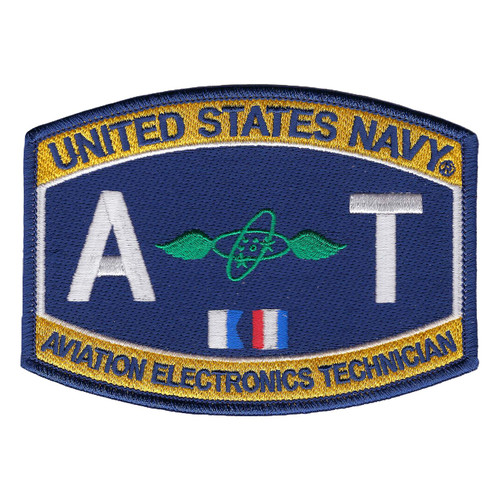
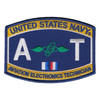
The green emblem between the A and the T is a winged helium atom, the specialty mark every Navy Aviation Electronics Technician wears. ATs keep naval aircraft talking, seeing and finding their way home. Communications, radar, navigation, antisubmarine sensors, electronic warfare, data link, fire control and tactical displays all belong to them. Under the letters, two small signal flags spell the rate a second time, Alfa and Tango, in the flag code every sailor learns. This patch is for the technicians who cleared the gripes before the launch.
The rating traces to December 11, 1942, when the Navy established the aviation radio technician rating for its wartime air fleet. It became aviation electronics technician's mate on October 31, 1945, aviation electronics technician on April 2, 1948, and took the AT abbreviation on June 9, 1948. The aviation electronicsman rating was folded in during 1955, and the aviation fire control technician (AQ) and aviation antisubmarine warfare technician (AX) ratings joined AT on January 1, 1991. Today O-level ATs work in the squadrons, deciding with a multimeter whether a fault is in the aircraft wiring or in a box, while I-level ATs repair components and circuit card assemblies at Fleet Readiness Centers and in shipboard Aircraft Intermediate Maintenance Departments. Both wear the same rate and the same title, though they take separate advancement exams.
The patch is 4.5 inches wide and 3.25 inches tall, with curved top and bottom edges and a navy blue merrowed border. A gold band across the top reads UNITED STATES NAVY in navy letters, and a matching band along the bottom reads AVIATION ELECTRONICS TECHNICIAN. The navy field between them, framed by a thin white line, carries a large white A and T on either side of the green winged atom. Two small signal flags sit under the atom, white and blue for Alfa and red, white and blue for Tango. It has a sew-on backing and is made to be stitched in place.
AT is one of the most technical paths in naval aviation, and the I-level A-school runs twice as long as the O-level course. Avionics work does not stop when flight ops do, and an AT's shift often starts when the aircraft come back with gripes. Every sub hunt, rescue and strike leaned on radios, radar and navigation gear an AT had signed off. The AQs and AXs who folded into the rating in 1991 brought fire control and antisubmarine know-how with them. Sailors who wore the winged atom know that a clean avionics check is the quiet half of every launch.
Sew it onto a jacket, vest or sea bag, or mount it in a shadow box with your squadron patches and your crow. It makes a good gift for a shipmate who struck AT, or for a retired avionics tech who still looks at the antennas on every airplane he sees. Winged atom, A and T.
Related Products