
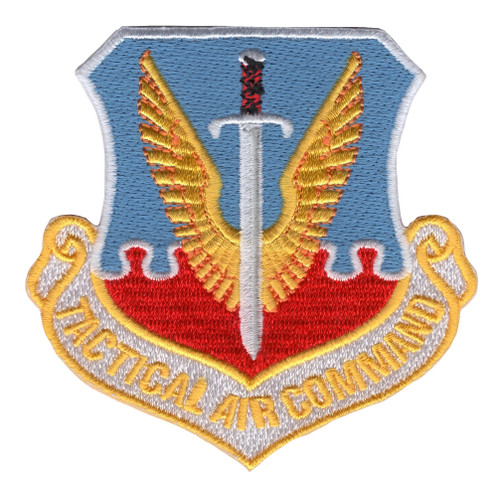
Tactical Air Command Patch
- SKU:
- 10006
- MPN:
- 10006
- Width:
- 3.00 (in)
- Height:
- 3.00 (in)
- Depth:
- 0.08 (in)
- Backing:
- Iron On
- Edging:
- Cut Edge

Description
Tactical Air Command patch marks the major command that controlled USAF fighter wings and tactical operations across the continental United States and overseas from 1946 until it was reorganized in 1992. TAC was the muscle behind American air superiority for nearly fifty years. If you flew fighters, flew CAS missions, or worked in tactical operations during that era, you wore TAC colors.
TAC controlled the 1st and 12th Air Forces and maintained the operational readiness posture that kept Soviet and then post-Cold War threats at bay. TAC squadrons cycled through Southeast Asia, the Cold War rotation, the Middle East, and countless training deployments. TAC discipline was legendary—General Momyer and his successors ran the tightest major command in the Air Force. Readiness inspections under TAC were no-notice events that terrified base commanders.
The patch displays TAC's unmistakable shield emblem with bold colors and clean lines. The design has remained essentially unchanged because it didn't need updating—it worked.
Wearing TAC means you were part of the tactical fighting force. Not transport, not strategic bombers, not support—you were tactical. You flew the fighters or worked the operations that made TAC credible. That distinction mattered in the Air Force hierarchy, and it still matters to veterans who made their careers in the tactical mission.
PopularPatch features this patch because TAC represented generations of fighter pilots and tactical airmen who shaped Air Force culture and capability.
Related Products


