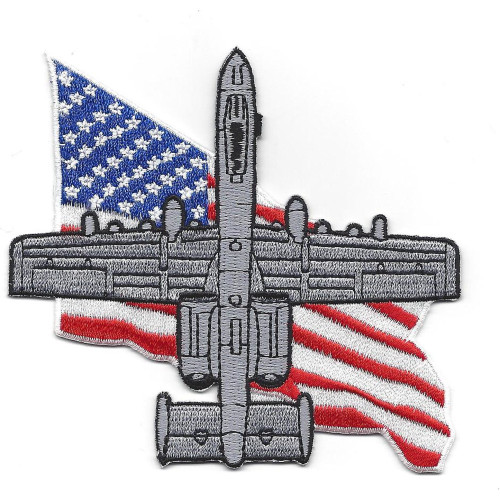
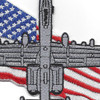
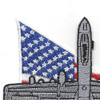
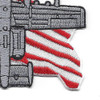
USA A-10 Thunderbolt II Flag Patch
- SKU:
- 12045
- MPN:
- 12045
- Width:
- 4.00 (in)
- Height:
- 3.50 (in)
- Depth:
- 0.08 (in)
- Backing:
- Iron On
- Edging:
- Cut Edge




Description
It was never designed to be elegant. It was designed to be present. The A-10 Thunderbolt II, known universally as the Warthog, became one of the most recognizable symbols of American airpower by doing exactly what it was built to do—show up when it mattered and stay until the mission was complete. Few aircraft have earned the trust of those on the ground the way the A-10 has, and fewer still have become as closely associated with the American flag it flies beneath.
Introduced during the Cold War, the A-10 was built around a single purpose: close air support. While faster jets focused on speed and altitude, the Thunderbolt II was designed to fly low, absorb damage, and remain overhead. Its straight wings, redundant systems, and unmistakable profile reflected a philosophy rooted in reliability and persistence. The aircraft’s unofficial reputation—often summed up in sayings like “Fear the Hog” or simply “The Hog”—came not from marketing, but from decades of performance.
The A-10 proved its value repeatedly. During Operation Desert Storm, Thunderbolt II squadrons flew thousands of sorties, providing direct support to coalition ground forces and demonstrating the aircraft’s ability to operate in demanding environments. That legacy continued through Operation Enduring Freedom and Operation Iraqi Freedom, where A-10 pilots became known for their patience, communication, and willingness to remain on station as long as needed. For many service members, the sound of a Warthog overhead became synonymous with reassurance.
Beyond combat operations, the A-10 came to represent a deeper principle in military aviation: commitment to those on the ground. Pilots trained extensively to coordinate with joint terminal attack controllers, infantry units, and special operations forces, ensuring precision and accountability. The aircraft’s longevity—despite repeated debates over its retirement—speaks to the unique role it continues to fill within the U.S. Air Force.
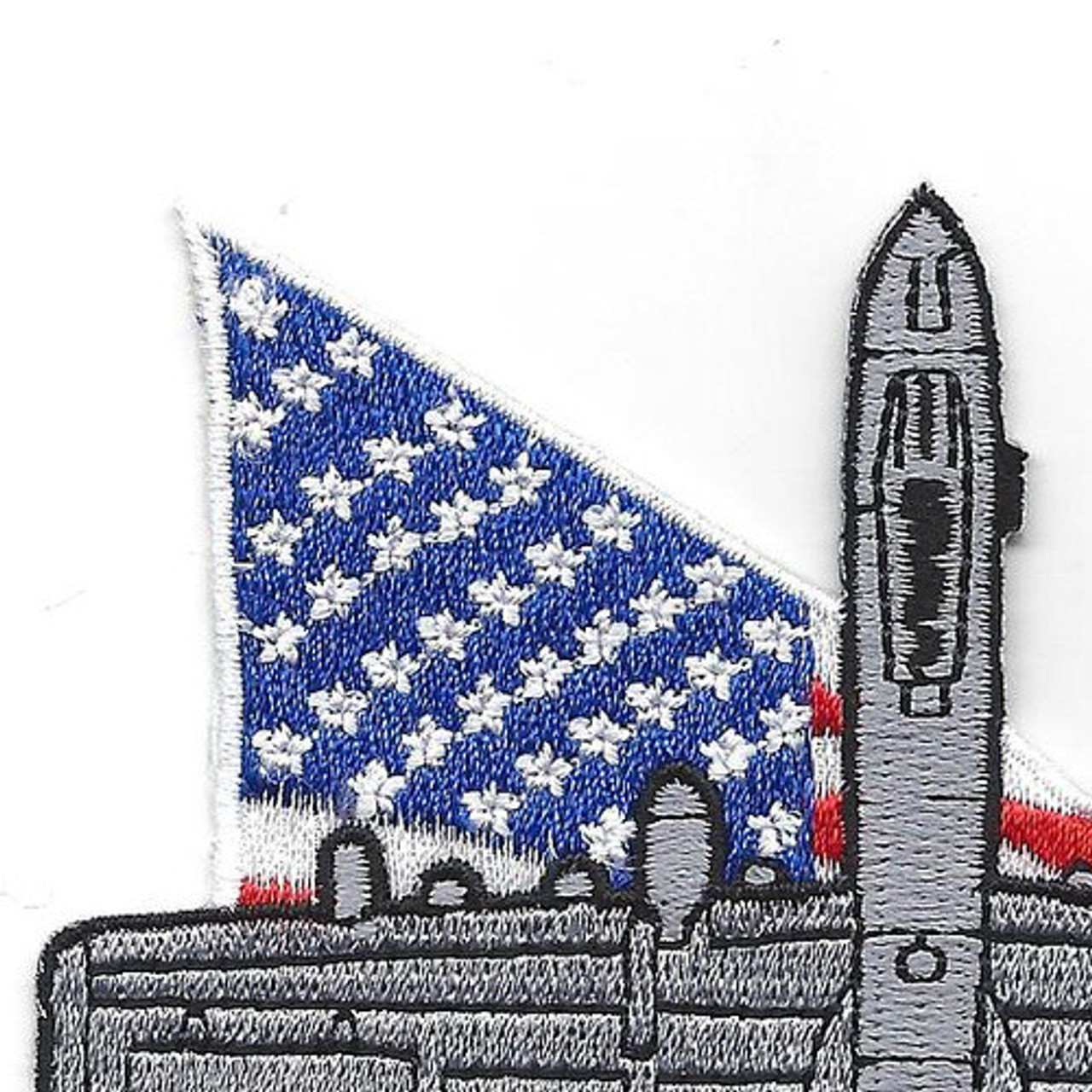
The American flag paired with the A-10 Thunderbolt II reflects more than patriotism. It represents a shared trust between air and ground, a machine designed around service rather than spectacle, and an aircraft that has remained relevant through changing eras of warfare. The Thunderbolt II’s legacy is not about speed or prestige, but about showing up, holding steady, and supporting the mission until the job is done.
The USA A-10 Thunderbolt II Flag patch honors that legacy. It stands for American airpower rooted in reliability, the pilots who flew the Warthog with discipline and care, and an aircraft that became an enduring symbol of support, resolve, and national pride.
Related Products