Special Operations Command USMC Patch

- SKU:
- 107
- MPN:
- 107
- Width:
- 4.00 (in)
- Height:
- 4.00 (in)
- Depth:
- 0.08 (in)
- Backing:
- Iron On
- Edging:
- Merrowed Edge

Description
Marine Corps Special Operations Command operates in the space between conventional warfare and pure direct action. MARSOC was activated on February 24, 2006, after decades of Marines serving in SEAL platoons and Special Forces ODAs without a dedicated Marine special operations force. The command trains Critical Skills Operators and Marine Raiders at Camp Lejeune, North Carolina, then deploys them worldwide under United States Special Operations Command. MARSOC elements served in Iraq's Anbar Province, Afghanistan's Helmand and Nimroz provinces, and across Africa and the Pacific in foreign internal defense and counterterrorism roles.
MARSOC drew from Force Reconnaissance and Marine Recon traditions but created something different. Raiders complete the Individual Training Course, then move to Marine Special Operations Teams within Marine Special Operations Battalions. They deployed to Fallujah, Ramadi, Sangin, and Marjah during the surge years. They lived in villages, trained foreign forces, conducted sensitive site exploitation, and ran direct action missions when needed. The command's missions range from counterinsurgency to unconventional warfare, demanding language proficiency, cultural awareness, and skills far beyond standard infantry tactics.
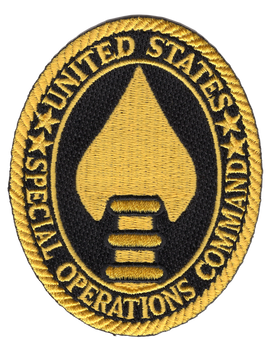
This circular patch measures 4 inches across with a gold merrowed border enclosing a red ring. Gold thread spells out "SPECIAL OPERATIONS COMMAND" across the top arc and "UNITED STATES MARINE CORPS" across the bottom. The center field is gold, interrupted by a black spearhead containing the Eagle, Globe, and Anchor in silver and gold thread. The spearhead design became the MARSOC symbol, representing the command's role as the tip of the spear. Iron-on backing allows for easy attachment to gear, and the embroidery quality ensures the details remain sharp.
For Marines who went through ITC, deployed downrange with an MSOT, or supported MARSOC missions from Lejeune or Pendleton, this patch connects to something specific. The command culture is different from the rest of the Corps, requiring individual initiative and judgment calls that conventional units don't face. Raiders remember the villages, the partners they trained, the operations that never made the news. Collectors recognize MARSOC patches as representing the newest branch of U.S. special operations forces, still writing their history with each deployment.
Display this patch in a shadow box with your MARSOC qualifications and deployment ribbons. Sew it onto a vest or jacket. Give it to someone who completed the pipeline or supported Raider operations. Mount it in your workshop or office. This is the insignia that marked a new era for Marine Corps special operations, and it belongs wherever you honor that service.
Related Products