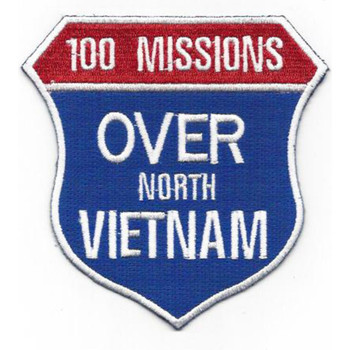
Operation Linebacker North Vietnam Patch

- SKU:
- 1246
- MPN:
- 1246
- Width:
- 4.00 (in)
- Height:
- 4.00 (in)
- Depth:
- 0.08 (in)
- Backing:
- Iron On
- Edging:
- Merrowed Edge
- Era:
- Vietnam War




Description
It was the moment when restraint ended and overwhelming airpower was unleashed with unmistakable intent. Operation Linebacker marked a turning point in the Vietnam War—a campaign that proved American airpower, when fully committed, could still dominate the battlefield and force strategic change. For eleven intense days in 1972, the skies over North Vietnam belonged to U.S. Navy and Air Force aviators who flew into the most heavily defended airspace on Earth.
By the spring of 1972, North Vietnam had launched the massive Easter Offensive, pushing conventional armored forces across the DMZ and threatening to overwhelm South Vietnamese defenses. Diplomatic pressure had failed. Limited strikes had failed. What followed was Linebacker—a deliberate, sustained aerial assault designed not just to punish, but to cripple North Vietnam’s ability to wage war.
From carriers on Yankee Station, Navy aircraft surged north. A-6 Intruders flew through darkness and weather to hit rail yards and supply hubs. A-7 Corsairs attacked bridges and infrastructure with precision. F-4 Phantom crews tangled with MiGs while surface-to-air missiles climbed skyward in lethal arcs. The Air Force struck in parallel, bringing B-52s into play later in the campaign and tightening the noose around Hanoi and Haiphong.
For the first time in years, American pilots were allowed to strike key targets previously off-limits—ports, power plants, rail networks, and supply routes feeding the front lines. Mining operations sealed Haiphong Harbor, cutting off seaborne resupply. Rail traffic from China was disrupted. Fuel and ammunition shortages began to cripple enemy operations. The battlefield felt the change almost immediately.
The cost was real. Pilots flew into dense SAM belts, heavy anti-aircraft fire, and aggressive MiG intercepts. Aircraft were lost. Crews were shot down, captured, or killed. Yet the tempo never slowed. Sorties launched day after day, night after night, with carrier decks operating at a relentless pace. Maintainers worked until exhaustion. Aircrews briefed, flew, debriefed, and launched again. The pressure never eased.
And it worked.
By October 1972, North Vietnam returned to the negotiating table. Linebacker had demonstrated that airpower—applied decisively and without hesitation—could alter the course of a war. It set the stage for later campaigns and reshaped how modern air operations would be planned and executed. For many veterans, Linebacker stands as proof that the war was not lost in the air—but constrained by policy until that moment.
The Operation Linebacker patch honors those who flew into the teeth of enemy defenses, those who kept the aircraft flying, and those who bore the cost of decisive action. It represents a campaign where skill, courage, and overwhelming force converged—and changed history.
Related Products