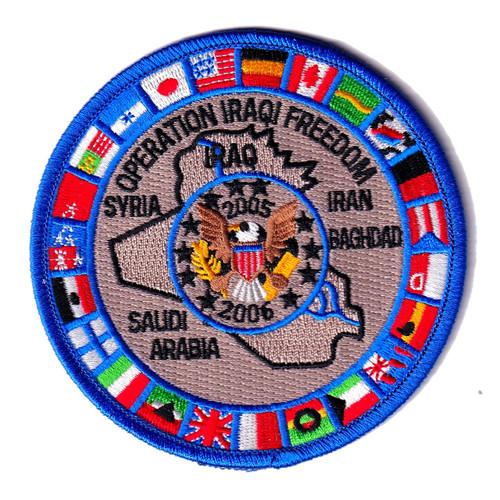
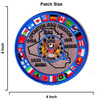
OIF Operation Iraqi Freedom Multi-National Force 2005-06 Patch
- SKU:
- 9314
- MPN:
- 9314
- Width:
- 4.00 (in)
- Height:
- 4.00 (in)
- Depth:
- 0.08 (in)
- Backing:
- Iron On
- Edging:
- Merrowed Edge



Description
It was a year defined by complexity, coalition, and constant responsibility. Operation Iraqi Freedom, Multi-National Force 2005–2006 marked a critical phase of the Iraq War, when the mission shifted from initial invasion to sustained stabilization, security, and partnership across an entire country. Forces from the United States and allied nations operated together under a unified command, carrying the burden of restoring order while building the foundations of Iraqi self-governance.
By 2005, the battlefield had changed. Large-scale maneuver operations gave way to persistent presence, patrols, and coordination with newly formed Iraqi security forces. The Multi-National Force–Iraq (MNF-I) brought together soldiers, Marines, sailors, airmen, and coalition partners from dozens of nations—each contributing unique capabilities, perspectives, and sacrifices. Language barriers, cultural differences, and varied rules of engagement were daily realities, yet the mission demanded unity of purpose.
Service members during this period operated from major hubs and remote outposts alike—Baghdad, Anbar Province, Mosul, Basra, and countless forward operating bases scattered across the country. Infantry units conducted neighborhood patrols and security operations. Engineers rebuilt roads, bridges, and essential infrastructure. Military police trained and advised Iraqi police forces. Intelligence teams worked tirelessly to understand a rapidly evolving environment. Aviation units provided constant overwatch, logistics, and medical evacuation. Naval personnel supported riverine operations, communications stations, logistics hubs, and joint command elements ashore.
The year 2005 also marked Iraq’s first democratic elections in decades, a milestone secured through extensive coalition coordination and round-the-clock security operations. In 2006, the mission grew more demanding as sectarian violence increased, placing even greater emphasis on discipline, restraint, and cooperation with Iraqi partners. It was a period where success was measured less by territory gained and more by stability achieved, relationships built, and lives protected.
Those who served under the Multi-National Force during 2005–2006 remember the pace, the uncertainty, and the weight of responsibility. Many units deployed repeatedly. Others found themselves performing roles far outside their original specialties, adapting daily to the needs of the mission. What united them was a shared understanding that they were part of something larger than any single nation—a coalition effort aimed at shaping a more stable future.
The Operation Iraqi Freedom Multi-National Force 2005–06 patch honors that chapter of service. It represents coalition unity, joint operations, and the men and women who carried out a demanding mission during one of the most complex periods of modern military history.
Related Products