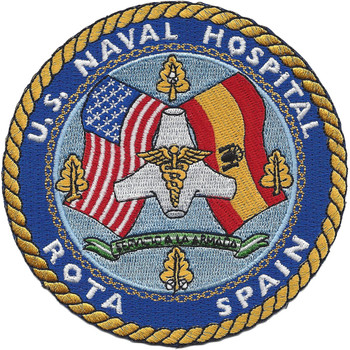
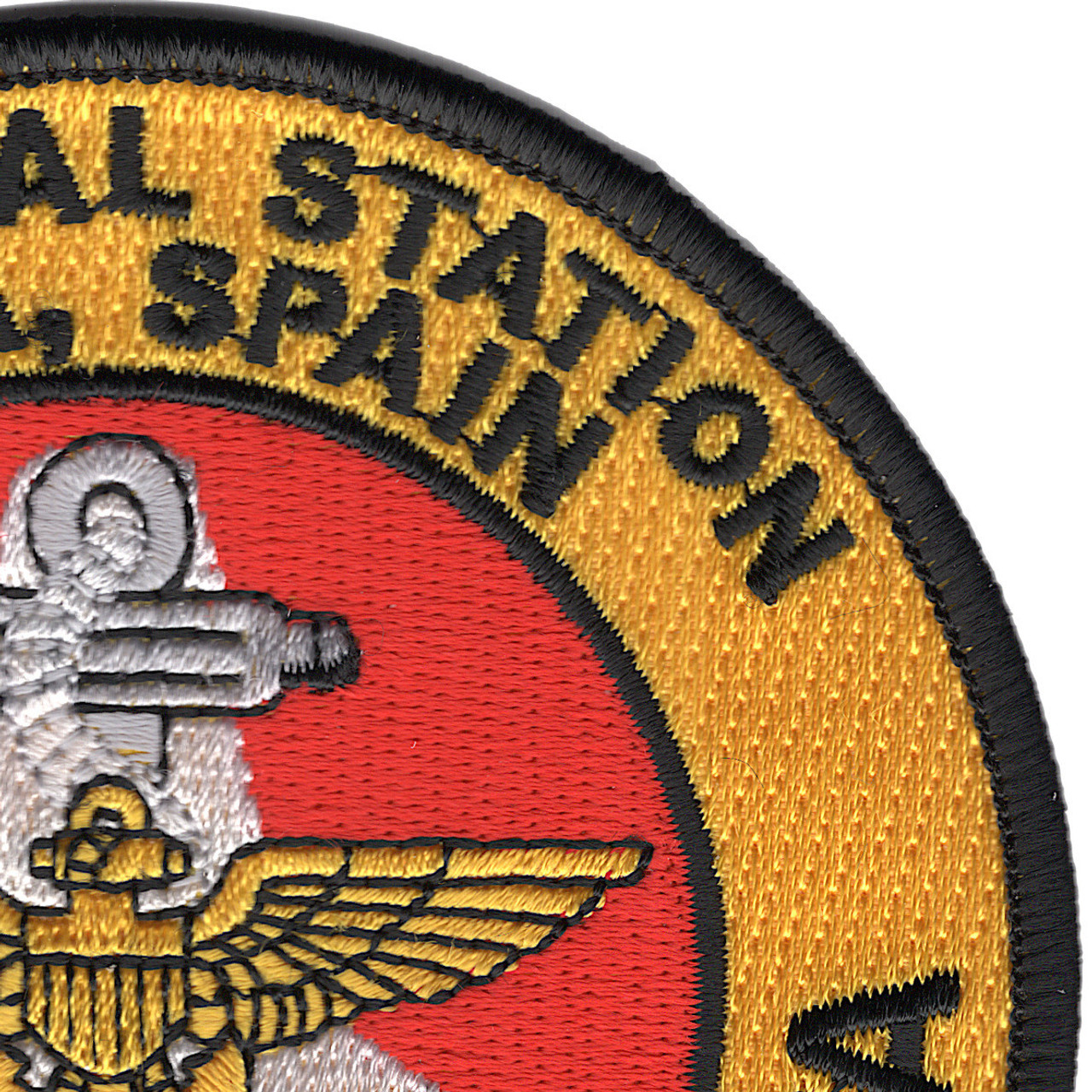
Naval Station Rota Spain Patch

- SKU:
- 844
- MPN:
- 844
- Width:
- 4.00 (in)
- Height:
- 4.00 (in)
- Depth:
- 0.08 (in)
- Backing:
- Iron On
- Edging:
- Merrowed Edge







Description
They call it the Gateway to the Mediterranean—a place where ships from across the world converge, where cultures meet, and where American sailors have stood watch for more than six decades. Naval Station Rota, Spain, is one of the U.S. Navy’s most strategic and enduring overseas hubs. For generations, its piers, runways, and whitewashed buildings on the Bay of Cádiz have supported missions that stretch from the Atlantic to the Middle East, anchoring American presence in a region defined by history, conflict, and constant change.
Established in 1953 through a historic agreement between the United States and Spain, Rota quickly became indispensable during the Cold War. Its deep-water port, calm bay, and proximity to the Strait of Gibraltar made it an ideal forward base for destroyers, supply ships, P-3 patrol aircraft, and logistics units supporting the 6th Fleet. From Rota, U.S. ships watched Soviet submarine movements, tracked strategic bombers, and ensured NATO’s maritime corridors remained secure.
Through Vietnam, the Yom Kippur War, and countless flashpoints of the 1970s and ’80s, Rota remained a steady presence—often serving as the last friendly port for ships heading east and the first welcome sight for crews returning home. Its airfield launched aircraft supporting Mediterranean operations, humanitarian missions, and rapid-response deployments. Thousands of sailors remember the warmth of Spanish hospitality, the sound of liberty boats in the harbor, and the long corridor leading back into the fleet after each port call.
In the post–9/11 era, Rota’s importance only grew. It became a critical logistics node for operations in Iraq and Afghanistan, a refueling and resupply point for transiting aircraft, and a staging area for naval forces responding to crises across Europe, Africa, and the Middle East. When NATO strengthened its missile defense network, Rota became home to forward-deployed Arleigh Burke–class destroyers—ships that now stand watch across Europe’s southern flank, defending allies from ballistic missile threats.
The base itself is a unique blend of cultures. American and Spanish sailors work side by side, sharing missions, traditions, and daily life. The town of Rota—with its beaches, ancient streets, tapas bars, and open plazas—has become a second home to generations of U.S. service members and families. Yet beyond the charm lies the constant hum of operational readiness: ships taking on fuel at the pier, C-130s warming on the flight line, and sailors preparing for missions that may carry them across three continents.
The Naval Station Rota, Spain patch honors this vital outpost and all who have served there. It represents a crossroads of strategy and culture, a base that links oceans and continents, and a community that has supported American naval power for more than half a century. To wear it is to remember long Mediterranean sunsets, early-morning flight ops, and the pride of serving at one of the Navy’s most storied and strategic installations.
Related Products