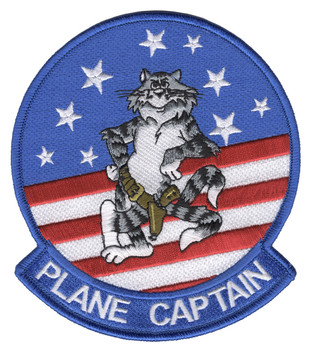
F-14 Tomcat Mascot Embroidered Patch
- SKU:
- 7452
- MPN:
- 7452
- Width:
- 3.75 (in)
- Height:
- 4.50 (in)
- Depth:
- 0.08 (in)
- Backing:
- Iron On
- Edging:
- Merrowed Edge





Description
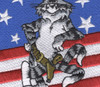
The AWG-9 radar in the nose of an F-14 could track twenty four targets at once and put six AIM-54 Phoenix missiles on six of them, some of them more than a hundred miles out. Nothing else in the fleet came close, and every Tomcat crew knew it. This patch carries the cartoon cat that came with the airplane, the grinning tomcat in a flight helmet who turned up on flight jackets, cruise boxes and ready room walls wherever F-14s were based. He sits on the stars and stripes here, leaning back, looking like the fight is already over. For anyone who flew the jet, fixed it, launched it or trapped it aboard, that cat needs no caption.
The first fleet Tomcats went to VF-1 Wolfpack and VF-2 Bounty Hunters at NAS Miramar, and both squadrons took them to sea aboard USS Enterprise in September 1974. They flew cover over Saigon during Operation Frequent Wind in April 1975. On 19 August 1981 two VF-41 Black Aces jets downed a pair of Libyan Su-22 Fitters over the Gulf of Sidra, and on 4 January 1989 VF-32 put two MiG-23 Floggers into the same water. TARPS made the Tomcat the fleet's tactical reconnaissance platform starting in 1981, and LANTIRN made it the Bombcat in the 1990s, carrying laser guided weapons over the Balkans, Afghanistan and Iraq. The last bomb came off a VF-31 Tomcatters jet over Iraq on 8 February 2006, and the airplane trapped aboard USS Theodore Roosevelt CVN-71 to close out the last combat cruise.
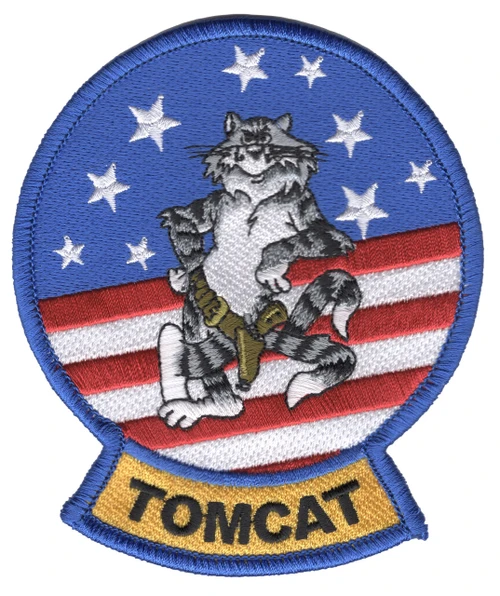
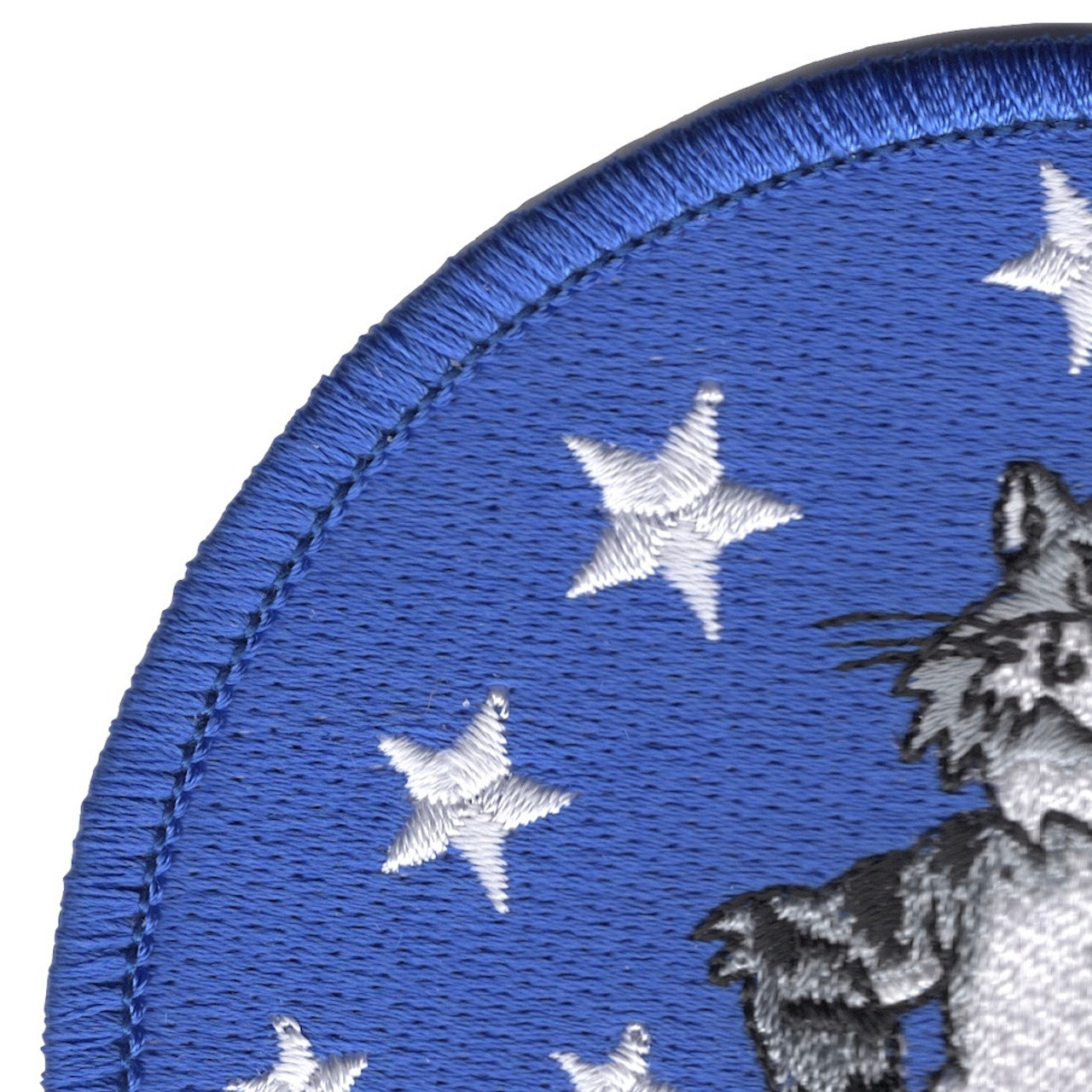
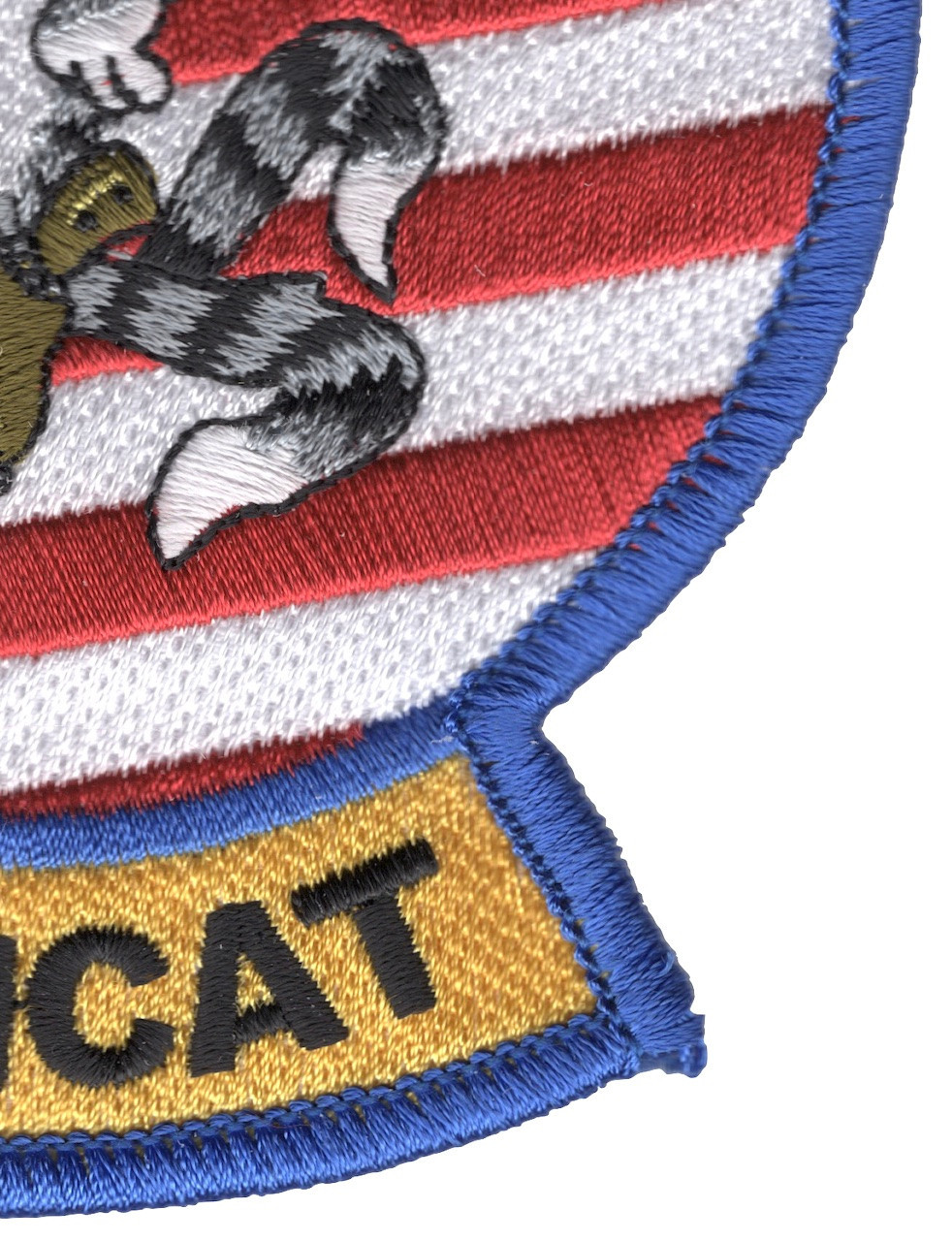
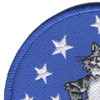
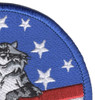
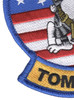
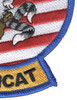
The patch is a circle with a scalloped tab hanging below it, edged the whole way around in a royal blue merrowed border. White stars fill the upper field and red and white stripes run across the bottom, so the flag carries the background instead of sitting off in a corner. The cat is stitched in grey and black with white highlights, seated and leaning back, helmet and mask on, a tan belt slung across his hips. TOMCAT reads in black block letters on the gold tab below. It measures 3.75 inches wide by 4.5 inches tall with iron on backing, and it sews down without any trouble.
The Tomcat was a two man airplane, and that shaped the community around it. The pilot had the stick, the RIO had the radar, and the intercept was won or lost on how well those two talked to each other. Miramar was Fightertown until the fighter squadrons moved east to NAS Oceana in the 1990s, and the jet was hard on the people who kept it flying, with variable sweep wings, TF30s in the early airframes and F110s later, and a maintenance load that made every launch something earned. Thirty two years of fleet service ended at Oceana on 22 September 2006, at the ceremony the community called Tomcat Sunset. Crowds drove in for it, which does not happen for most airplanes.
In a shadow box with cruise patches and a squadron plaque it reads as what it is, the mark of the airplane a man spent years around. It works on a flight jacket or on the vest that comes out for squadron reunions, and it makes a plain, easy gift for a son or grandson who has heard the stories and wants something to hold. The cat has outlived the airplane by twenty years and shows no sign of quitting.
Related Products