
EMT Paramedic Firefighter Fire Rescue Patch
- SKU:
- 14179
- MPN:
- 14179
- Width:
- 3.00 (in)
- Height:
- 3.00 (in)
- Depth:
- 0.08 (in)
- Backing:
- Iron On
- Edging:
- Cut Edge





Description
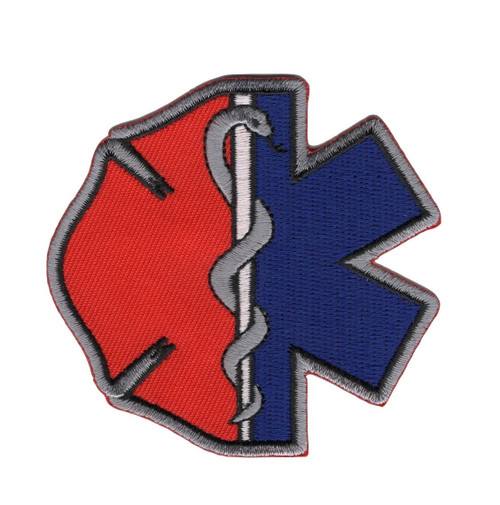
The EMT Paramedic Firefighter Fire Rescue Patch merges two emblems into one die-cut embroidered piece: the red Maltese cross of the fire service on the left, the blue Star of Life of emergency medical services on the right, overlapping at the center where the Rod of Asclepius runs down the seam between them. No background fill, no square border. The shape of the patch is the shape of the two symbols combined, finished with a gray merrow die-cut edge. It is the dual-role firefighter/paramedic identity put in one patch.
The firefighter/paramedic became the standard in American fire departments through the 1970s and 80s, as departments cross-trained their personnel to handle the growing medical response load. By the time most major departments completed the transition, the majority of calls were not for fires at all. The dual-trained firefighter/paramedic became the backbone of urban EMS: the person who could cut someone out of a wreck, start a line, intubate on the pavement, and ride in to the hospital. That is the role this patch represents.
The design is precise. The Maltese cross and Star of Life are split cleanly down the center where they overlap, embroidered in their traditional colors: red for fire, blue for EMS. The Rod of Asclepius stitched at the junction is the detail that ties them together, the snake-wrapped staff of medicine running down the seam. The gray merrow die-cut border follows the combined shape, finishing the edge without adding a framing element that would change the form.
Firefighter/paramedics put this on gear bags, turnout jackets, duty vests, and anywhere else they carry their kit. It is a clean way to wear both identities at once without stacking two separate patches. For collectors, it is one of the more visually interesting dual-emblem designs in first responder patch culture.
Red for fire, blue for EMS. One patch for the person who works both sides of the call.
Related Products


