
Combat search and rescue CSAR - Sandy 1 Patch

- SKU:
- 4258
- MPN:
- 4258
- Width:
- 4.00 (in)
- Height:
- 4.00 (in)
- Depth:
- 0.08 (in)
- Backing:
- Sew On
- Edging:
- Merrowed Edge





Description
Sandy 1 is the A-10 pilot who goes in first when a flyer is down in hostile territory — the on-scene CSAR commander who locates the survivor, suppresses the threat, and talks the rescue helicopter in under fire.
The Sandy callsign dates to Vietnam, where A-1 Skyraiders flew the role before A-10s inherited it. In the modern era, Sandy pilots fly A-10s low and slow over enemy-held terrain — authenticating the survivor, clearing threats on the ground, and coordinating with HH-60 Pave Hawk crews for the extract. Sandy 1 is the flight lead running the whole operation. The risk calculus is deliberate: the Sandy pilot accepts the most exposed position in the rescue package so the downed aircrew has a fighting chance of coming home. "So Others May Live" is the CSAR community's core statement — not a slogan, a job description. That mission thread runs from the jungles of Southeast Asia through every conflict where US aircraft have gone down in contested territory.
If you flew the Sandy role, trained for CSAR, worked with HH-60 rescue crews, or were the survivor on the ground when a Sandy flight came overhead, this patch is a direct marker of that world. The A-10 community and the rescue community share this one.
The Sandy 1 patch doesn't get enough shelf space in collections built around fast-movers and strike aircraft. The pilots who flew this role operated at lower altitude with higher exposure than almost anyone else in the package — and the patch is rare enough to match that distinction.
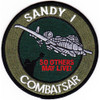
This embroidered patch measures 4 inches across in a circular shape. A black outer border frames an olive green inner ring. The dark green center field shows a white A-10 Warthog in profile banking over a silhouette of a downed aircrew member below. "SO OTHERS MAY LIVE!" cuts across the center in bold red letters. "SANDY 1" arcs across the top of the olive ring in white and "COMBATSAR" runs across the bottom — two words that define the mission and the role without needing any further explanation.
Related Products


