
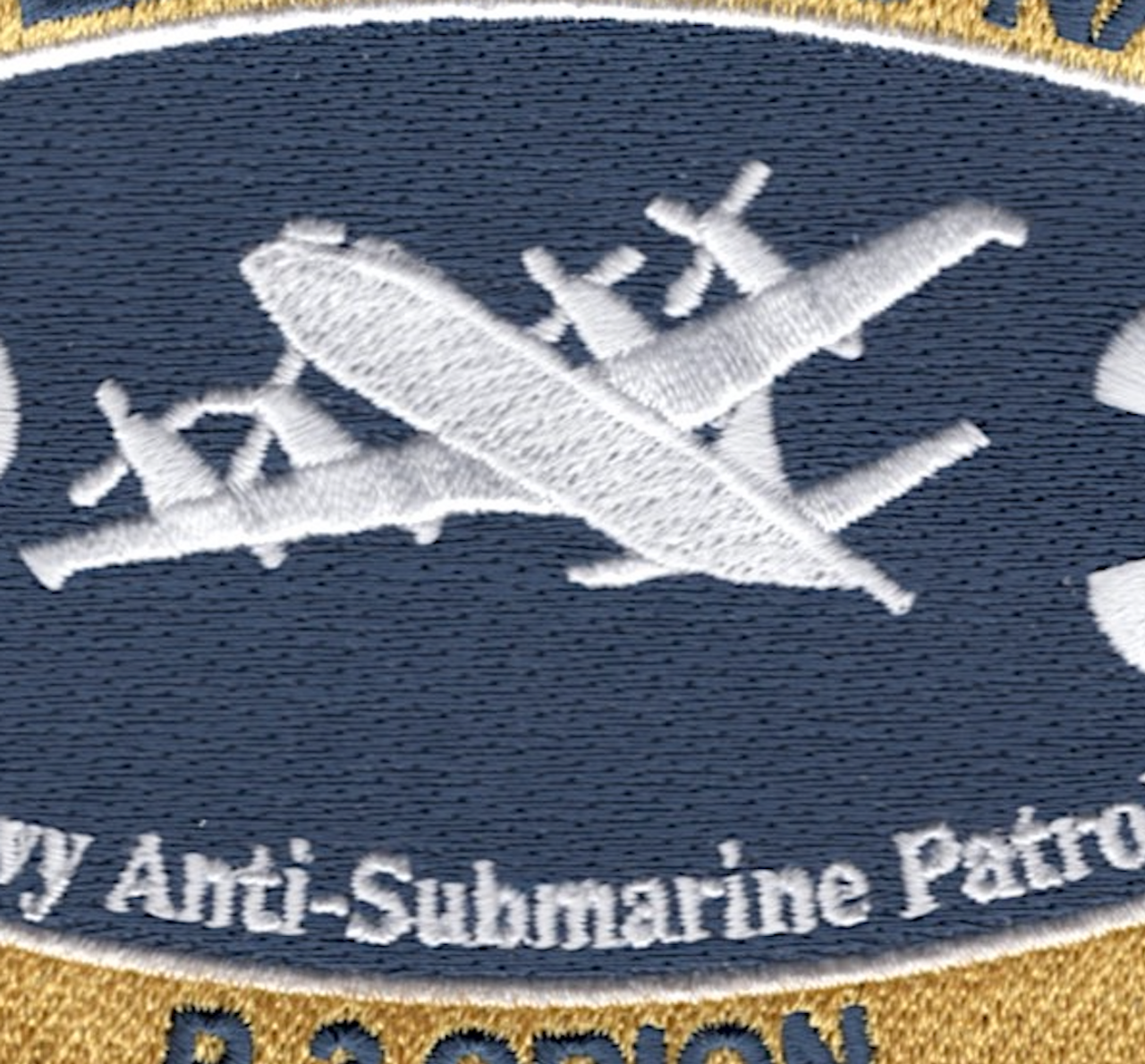
Aviation Rating P-3 Orion Navy Anti-Submarine Patrol Patch Rating

- SKU:
- 7560
- MPN:
- 7560
- Width:
- 4.50 (in)
- Height:
- 3.25 (in)
- Depth:
- 0.08 (in)
- Backing:
- Iron On
- Edging:
- Merrowed Edge





Description
For decades, its silhouette was the last thing an enemy submarine ever wanted to see. The P-3 Orion became the watchful guardian of the oceans, an aircraft synonymous with U.S. Navy anti-submarine patrols and the long, patient art of maritime dominance. Where the sea concealed threats beneath thousands of feet of water, the Orion listened, tracked, and waited—sometimes for days—until the moment came to act.
Introduced during the height of the Cold War, the P-3 Orion was designed for a mission few ever witnessed but everyone depended on: finding submarines before they could be used. Flying low and slow over vast stretches of ocean, Navy patrol squadrons operated far from carriers and headlines, guarding sea lanes, monitoring choke points, and protecting carrier strike groups and ballistic missile submarines. It was quiet work, but it carried global consequences.
From bases around the world—places like Jacksonville, Whidbey Island, Sigonella, Kadena, and Keflavik—P-3 crews launched into some of the longest missions in naval aviation. Twelve-hour flights were routine. Crews relied on teamwork, discipline, and trust as acoustic operators listened for faint signatures through sonobuoys, navigators plotted endless grids of ocean, and pilots held precise altitude over open water. The Orion was not fast, but it was relentless.
During the Cold War, the P-3 stood watch against Soviet submarine fleets, forming a key layer of deterrence that kept global tensions from turning hot. That mission continued into later decades as the Orion adapted to new roles. In Vietnam, P-3s flew coastal surveillance and interdiction missions. During Operation Desert Storm, they tracked naval movements in the Persian Gulf. In the years that followed, they supported operations in the Balkans, the Middle East, and the Global War on Terror—conducting maritime patrol, intelligence gathering, and overland surveillance.
The aircraft itself became legendary. Four turboprop engines gave it endurance unmatched by most platforms. Its sensor suite evolved over time, but the mission remained the same: find what others could not see. For generations of sailors, being part of a P-3 squadron meant mastering patience, precision, and professionalism. The saying was often simple—if you controlled the seas, you controlled the fight, and the Orion helped ensure that control.
Even as newer aircraft began to replace it, the P-3 Orion left behind a reputation that cannot be retired. It represents an era when naval aviation quietly safeguarded the balance of power, when anti-submarine patrols were a daily responsibility, and when crews flew knowing that success meant nothing happened at all.
The U.S. Navy P-3 Orion Anti-Submarine Patrol patch honors that legacy. It stands for long hours over open ocean, unseen vigilance, and the sailors and aircrew who kept watch beneath the waves so others never had to.
Related Products


