
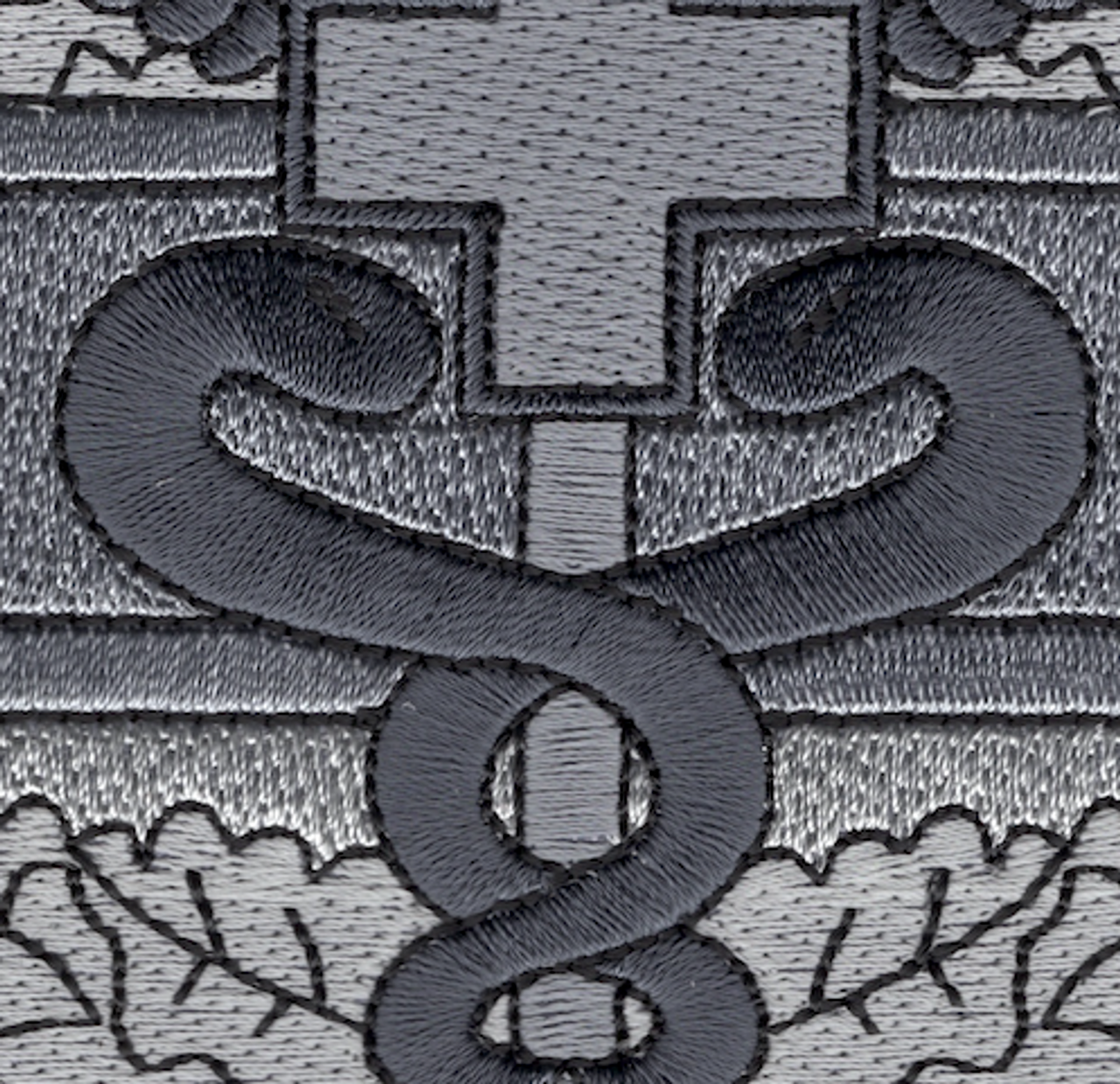
Army Combat Medic Badge Patch

- SKU:
- 11532
- MPN:
- 11532
- Width:
- 4.50 (in)
- Height:
- 3.00 (in)
- Depth:
- 0.08 (in)
- Backing:
- Iron On
- Edging:
- Cut Edge



Description
The Army Combat Medic Badge represents service rendered at the point where medicine meets combat, where care is given not in controlled environments but under conditions shaped by urgency, uncertainty, and danger. Authorized during World War II, the badge was created to recognize medics who shared the risks of infantrymen while carrying the responsibility of preserving life amid battle. It marked a role that demanded both technical skill and moral resolve.
From the hedgerows of Europe and the islands of the Pacific, combat medics moved with frontline units, often unarmed, distinguished only by the insignia on their uniforms and the trust of the soldiers beside them. They treated wounds under fire, stabilized casualties in exposed terrain, and evacuated the injured through chaos that offered little protection or pause. Their presence reinforced a quiet truth of warfare: survival often depends on those who run toward danger without intent to fight it.
The badge became a lasting symbol during Korea and Vietnam, where medics operated in harsh climates and unpredictable engagements. Jungle patrols, mountainous terrain, and extended operations tested endurance as much as skill. Medics learned to improvise, adapt, and make life-altering decisions in seconds, carrying both medical kits and the emotional weight of caring for comrades they lived and moved with daily.
In the decades that followed, the Combat Medic Badge continued to reflect evolving warfare. During Desert Storm and later in Operations Enduring Freedom and Iraqi Freedom, medics faced new threats while supporting increasingly complex operations. Advanced battlefield medicine saved lives that once would have been lost, but the fundamental reality remained unchanged: medics operated forward, exposed, and essential.
The culture behind the badge is defined by humility and service rather than recognition. Combat medics are remembered less for individual acts than for consistency—the steady presence during patrols, the calm voice during crisis, and the willingness to place themselves between injury and uncertainty. The badge does not celebrate violence; it honors care delivered when conditions make compassion hardest to practice.
Within the United States Army, the Combat Medic Badge carries deep respect. It signifies not only proximity to combat, but commitment to preserving life while sharing the same risks as those it protects. It is earned, not assigned, and worn with quiet understanding among those who recognize its meaning.
Related Products


