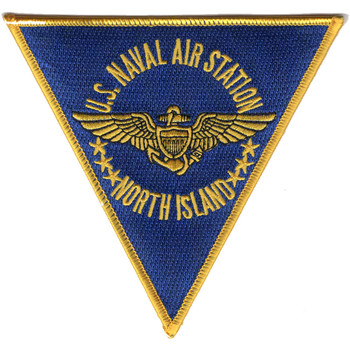
Air Station Cherry Point North Carolina Patch

- SKU:
- 833
- MPN:
- 833
- Width:
- 5.00 (in)
- Height:
- 4.38 (in)
- Depth:
- 0.08 (in)
- Backing:
- Iron On
- Edging:
- Cut Edge






Description
They call it the beating heart of Marine Corps aviation on the East Coast—a place where the thunder of engines, the crackle of radios, and the long traditions of expeditionary airpower converge. Marine Corps Air Station Cherry Point, North Carolina, has launched fighters, attack aircraft, and support squadrons into nearly every major conflict since World War II. From these runways, Marines have answered crises across the globe, living the ethos of the Corps and carrying forward the legacy of a station built for war, refined by combat, and sustained by generations of aviators and maintainers.
Commissioned in 1942, Cherry Point was born in a moment when America desperately needed airfields capable of training and launching pilots into battle. As Marines surged into the Pacific, Cherry Point became a vital hub for flight training, maintenance units, and aviation logistics. Squadrons prepared here for the island campaigns of World War II, where Marine aviators supported ground forces at Guadalcanal, Peleliu, Iwo Jima, and Okinawa—operations that defined the Corps’ integration of aviation and infantry.
During the Korean War, Cherry Point squadrons deployed to the peninsula, flying close air support missions that saved countless Marines pinned down on frozen ridgelines. Jets and helicopters streamed from North Carolina to the war zone, bringing new tactics and technologies that reshaped modern air combat. The air station’s tempo only increased as the Cold War tightened; Cherry Point became home to the 2nd Marine Aircraft Wing, the backbone of Marine aviation readiness on the East Coast.
By the time of the Vietnam War, Cherry Point was a launching point for A-6 Intruders, A-4 Skyhawks, and other Marine aircraft that delivered precision firepower from the Gulf of Tonkin to the Mekong Delta. Many of the pilots who braved anti-aircraft fire in cloudy monsoon skies took their first steps into Marine aviation on Cherry Point’s runways.
When the global landscape shifted again, Cherry Point remained ready. Squadrons flew from here to support Operation Desert Storm, unleashing strikes deep into Iraq and providing essential battlefield coordination. In the decades that followed, aircraft and personnel trained at Cherry Point deployed for Operation Allied Force in Kosovo, Operation Enduring Freedom, and Operation Iraqi Freedom, conducting close air support, reconnaissance, and precision missions that shaped the outcomes of modern conflicts.
The station adapted as aviation evolved—from prop-driven aircraft to jets, from analog cockpits to digital systems, and finally to the modern era of the F-35B, whose training, logistics, and maintenance pipelines run directly through Cherry Point. Today, Marines stationed here continue to support operations worldwide, from crisis response missions in Africa and the Middle East to humanitarian relief efforts after hurricanes and earthquakes. The base stands as a symbol of readiness, a constant reminder of the Marine Corps motto: “Semper Fidelis.”
The MCAS Cherry Point patch honors this proud heritage. It represents the aviators who launched into danger, the maintainers who kept aircraft flying no matter the hour, and the station that has shaped Marine Corps airpower for more than eighty years. To wear it is to recognize a legacy of precision, courage, and unbroken service.
Related Products