
1st Tactical Fighter Wing Patch
- SKU:
- 2084
- MPN:
- 2084
- Width:
- 3.00 (in)
- Height:
- 3.50 (in)
- Depth:
- 0.08 (in)
- Backing:
- Iron On
- Edging:
- Cut Edge


Description
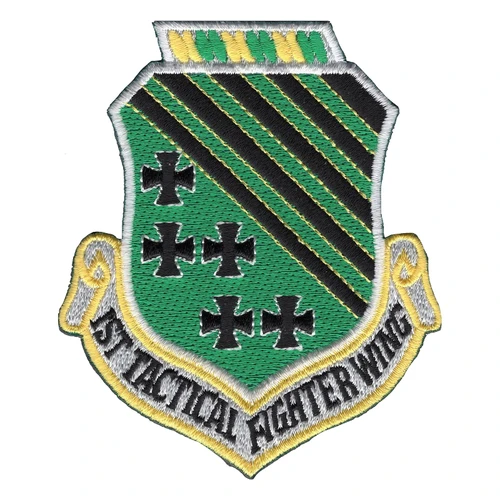
The five black crosses on this shield stand for the five major World War I campaigns credited to the 1st Pursuit Group, and the design was approved on 21 January 1924. Green and black were the colors of the Army Air Service. The stripes stood for the group's five original flying squadrons. Very few emblems in the Air Force go back that far, and the wing still flies under it. Anyone who served in the 1st TFW wore a century of fighter history on his shoulder.
The unit became the 1st Tactical Fighter Wing on 1 October 1970 and flew F-4 Phantom IIs at MacDill AFB, Florida, training aircrews. In 1975 Tactical Air Command moved it to Langley AFB, Virginia. The first F-15B landed there on 18 December 1975 and the first single-seat F-15A Eagle arrived on 9 January 1976, making the 1st the first operational F-15 wing. The 27th, 71st and 94th Tactical Fighter Squadrons flew under it, the 94th being the old Hat in the Ring squadron of Rickenbacker's day. On 7 August 1990 the 27th and 71st began deploying to Saudi Arabia for Desert Shield, the first U.S. combat units on the ground there, and the wing's F-15Cs went on to fly in Desert Storm.
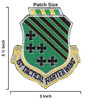
This is a cut edge patch, 3 inches wide by 3.5 inches tall, with an iron-on back. The green shield carries diagonal black bands outlined in gold thread across the upper corner and the five black crosses, each outlined in white, below them. A twisted green and gold wreath bar sits on top. Across the bottom, a silver scroll edged in gold reads 1ST TACTICAL FIGHTER WING in black letters.
The wing was redesignated the 1st Fighter Wing on 1 October 1991, so this patch belongs to the Tactical Air Command years, Phantoms at MacDill and Eagles at Langley. The 1st flew the F-15 for almost 35 years, until the last one left Langley on 3 September 2010. By then the 27th and 94th had become the first squadrons anywhere to reach operational status with the F-22 Raptor, in 2005. Crew chiefs, weapons loaders and pilots from those years remember the Eagle ramp at Langley the way other men remember a ship.
Put it in a shadow box with an F-15 model and a TAC patch, or on a flight jacket worn to a 1st TFW reunion. It is a good gift for a retired crew chief who spent his twenties on the Langley flight line. A plain patch with a long record behind it.
Related Products


