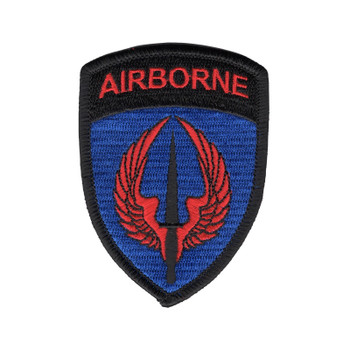
160th SOAR Night Stalkers Patch 101st Airborne Division
- SKU:
- 2-IR
- Width:
- 3.12 (in)
- Height:
- 3.37 (in)
- Depth:
- 0.08 (in)

Description
This comes in Iron-on or Hook Backing
The 160th Special Operations Aviation Regiment (Airborne) operates where conventional aviation ends. Formed in 1981 from the ashes of Task Force 160 and the lessons of Operation Eagle Claw, the Night Stalkers fly the most dangerous insertions and extractions in the Army inventory. They pilot MH-60 Black Hawks, MH-47 Chinooks, and AH-6 Little Birds into conditions that would ground most units. Their missions include the Abbottabad raid that killed Osama bin Laden, the rescue of Marcus Luttrell in Afghanistan, operations in Mogadishu during Gothic Serpent, and countless classified insertions across Iraq, Syria, and beyond. The unit motto is direct: Night Stalkers Don't Quit. Based at Fort Campbell, Kentucky, the regiment draws from the 101st Airborne Division and operates under Joint Special Operations Command.
The 160th SOAR rewrote the manual on rotary-wing special operations. Their aircrews train for low-level flight using night vision goggles, often at altitudes below 100 feet in complete darkness. They pioneered fast-rope insertions, aerial refueling techniques for special operations helicopters, and terrain-following navigation without electronic aids. During Operation Just Cause in Panama, Night Stalkers inserted Rangers onto Torrijos International Airport under fire. In Somalia, they flew into the Battle of Mogadishu and extracted casualties while taking heavy ground fire. In Afghanistan and Iraq, they became the primary insertion platform for Delta Force and SEAL Team Six operations. The crescent moon on their insignia is not decorative; it reflects the fact that most of their missions occur between midnight and dawn, in conditions where visibility is measured in feet and margins for error do not exist.
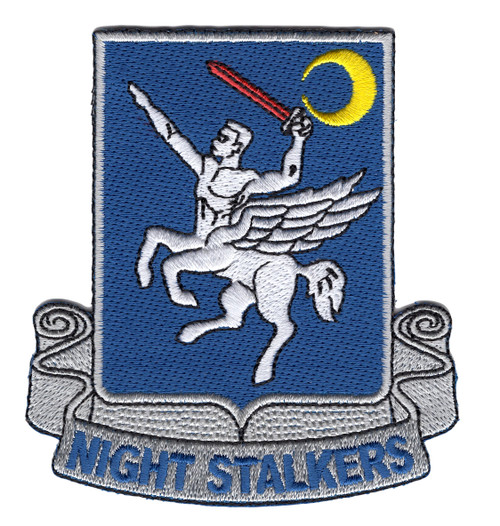
This embroidered patch captures the regiment's identity in striking detail. A white Pegasus figure dominates the design, brandishing a red sword overhead, positioned against a deep blue background beneath a yellow crescent moon. The winged horse stands in mid-leap, evoking speed and agility. Below, a silver scroll unfurls with the words NIGHT STALKERS stitched in blue capital letters. The entire design sits within a shield shape bordered by merrowed stitching. The combination of the mythological Pegasus and the crescent moon creates a powerful visual reference to airborne operations conducted under darkness. The patch measures 4 inches and features an iron-on backing for convenient attachment.
For those who served with the 160th or supported their missions, this patch represents more than aviation excellence. It represents the sound of rotors at 0200 hours, the controlled chaos of a hot extract, and the trust between pilots and the operators they insert. Night Stalker crews are known for their calm under fire and their refusal to leave anyone behind. The regiment's legacy includes multiple Medal of Honor recipients and countless acts of valor that remain classified. Collectors value 160th SOAR memorabilia for its association with some of the most significant special operations missions in modern history. The Pegasus insignia has become one of the most recognized symbols in military aviation circles.
Display this patch in a shadow box alongside other Army aviation or special operations memorabilia. Wear it on a flight jacket, tactical vest, or cap to honor the Night Stalkers who continue to fly the most dangerous missions in the inventory. It makes a meaningful gift for 160th SOAR veterans, Army aviators, 101st Airborne personnel, or anyone who respects the intersection of aviation skill and special operations tradecraft. Add it to your range bag or gym bag as a daily reminder of what disciplined crews can accomplish when failure is not an option.
Related Products