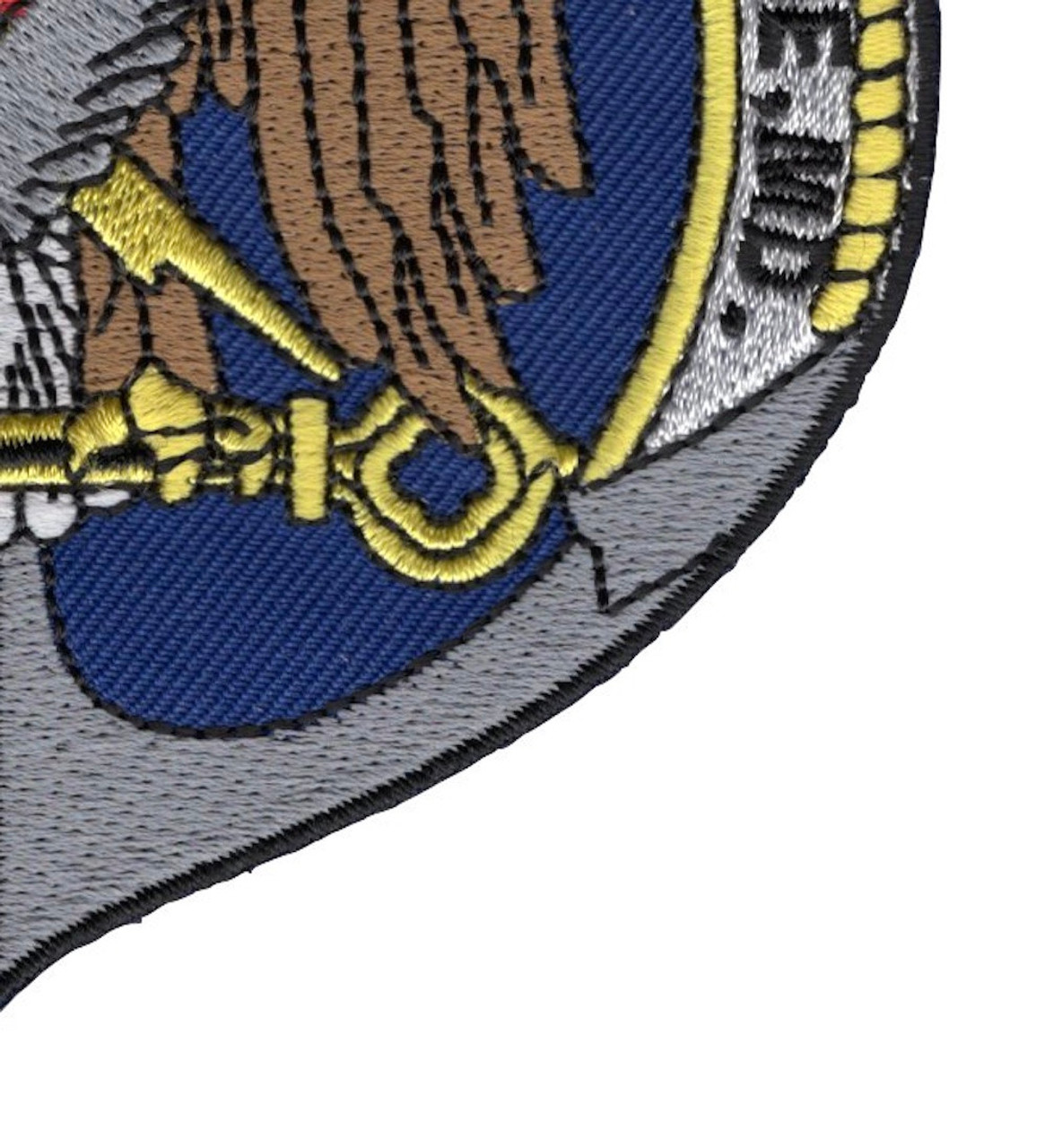
NSGA Naval Security Group Activity Fort Meade Maryland Patch

- SKU:
- 14158
- MPN:
- 14158
- Width:
- 3.75 (in)
- Height:
- 4.50 (in)
- Depth:
- 0.08 (in)
- Backing:
- Iron On
- Edging:
- Cut Edge





Description
They worked behind locked doors and under layers of silence, in a world where success was measured not by medals or headlines, but by what never happened. Naval Security Group Activity Fort Meade, Maryland, stood at the center of America’s signals intelligence enterprise, where sailors of the Naval Security Group carried out missions that shaped global events without ever leaving a trace in public history.
Established at Fort Meade during the rise of Cold War intelligence, NSGA Fort Meade became one of the Navy’s most critical shore commands. Located alongside the nation’s premier intelligence organizations, the activity served as a hub for cryptologic operations, signals exploitation, and secure communications. Here, Naval Security Group sailors listened, analyzed, decrypted, and interpreted the electronic pulse of the world—turning intercepted signals into intelligence that guided fleets, aircraft, and decision-makers at the highest levels.
The work demanded absolute precision and discipline. Cryptologic technicians and intelligence specialists operated around the clock, tracking adversary movements, monitoring strategic communications, and supporting naval and joint commanders across the globe. During the Cold War, NSGA Fort Meade played a quiet role in monitoring Soviet naval activity, ballistic missile forces, and command-and-control networks—missions tied directly to deterrence and national survival.
As conflicts shifted, so did the mission. During Vietnam, signals intelligence supported air and naval operations in Southeast Asia. In later decades, NSGA Fort Meade contributed to operations in the Middle East, the Balkans, and beyond, providing intelligence support during campaigns such as Desert Storm, Kosovo, and the early phases of the Global War on Terror. Though the sailors stationed there rarely deployed forward, their work traveled instantly—flowing to submarines beneath the sea, carrier strike groups over the horizon, and commanders planning real-world operations.
Life at NSGA Fort Meade carried its own culture. Long hours in secure spaces. Strict adherence to protocol. A deep sense of trust among those who understood the weight of classified responsibility. Many sailors would later say that serving there taught them patience, analytical rigor, and the understanding that modern warfare is often decided long before the first shot is fired.
The Naval Security Group itself was eventually reorganized and absorbed into newer intelligence structures, but its legacy remains intact. The sailors who served at Fort Meade helped define naval cryptology and laid the groundwork for today’s information-dominant battlefield. Their unofficial ethos reflected the mission perfectly: quiet professionals, guarding secrets that guarded the nation.
The NSGA Fort Meade patch honors that hidden service. It represents the sailors who stood watch in silence, the intelligence that protected fleets and lives, and the command that helped ensure America always knew more than its adversaries. To wear it is to recognize a legacy built on trust, precision, and duty carried out far from the spotlight.
Related Products